Pet-Friendly Screen Rooms: Durable Features for Homes With Dogs and Cats
A homeowner in Metairie installs a set of gutter guards over a weekend, confident the clogging problem is solved for good. Two storms later, water is sheeting off the roof edge and skipping the gutter entirely. The guards were not defective. They were simply the wrong system for a steep metal roof, mounted in a way that never accounted for how fast water moves off that surface. This scenario plays out constantly across Greater New Orleans, because gutter guards are not a universal product that performs identically on every home.
Roof type shapes almost everything about how a guard performs: how the panel attaches, how water enters the gutter, and how debris behaves once it lands. A guard that excels on an asphalt shingle roof can fail on tile or metal if the installer ignores the differences. Understanding how each common roofing material interacts with gutter protection helps homeowners avoid the frustration of paying for a system that looks right but drains poorly during the heavy rainfall Louisiana delivers month after month.
Roof type is only half the equation
Gutter guards do work with metal, shingle, and tile roofs, but not the same guard installed the same way on all three. The roofing material determines how water leaves the roof, how the guard attaches, and which debris the system has to reject. Getting that match right is the difference between a guard that eliminates cleaning for years and one that quietly redirects water in ways that damage fascia and foundation. A professional assessment of your specific roof, gutter size, and surrounding tree cover is the only reliable way to choose correctly.
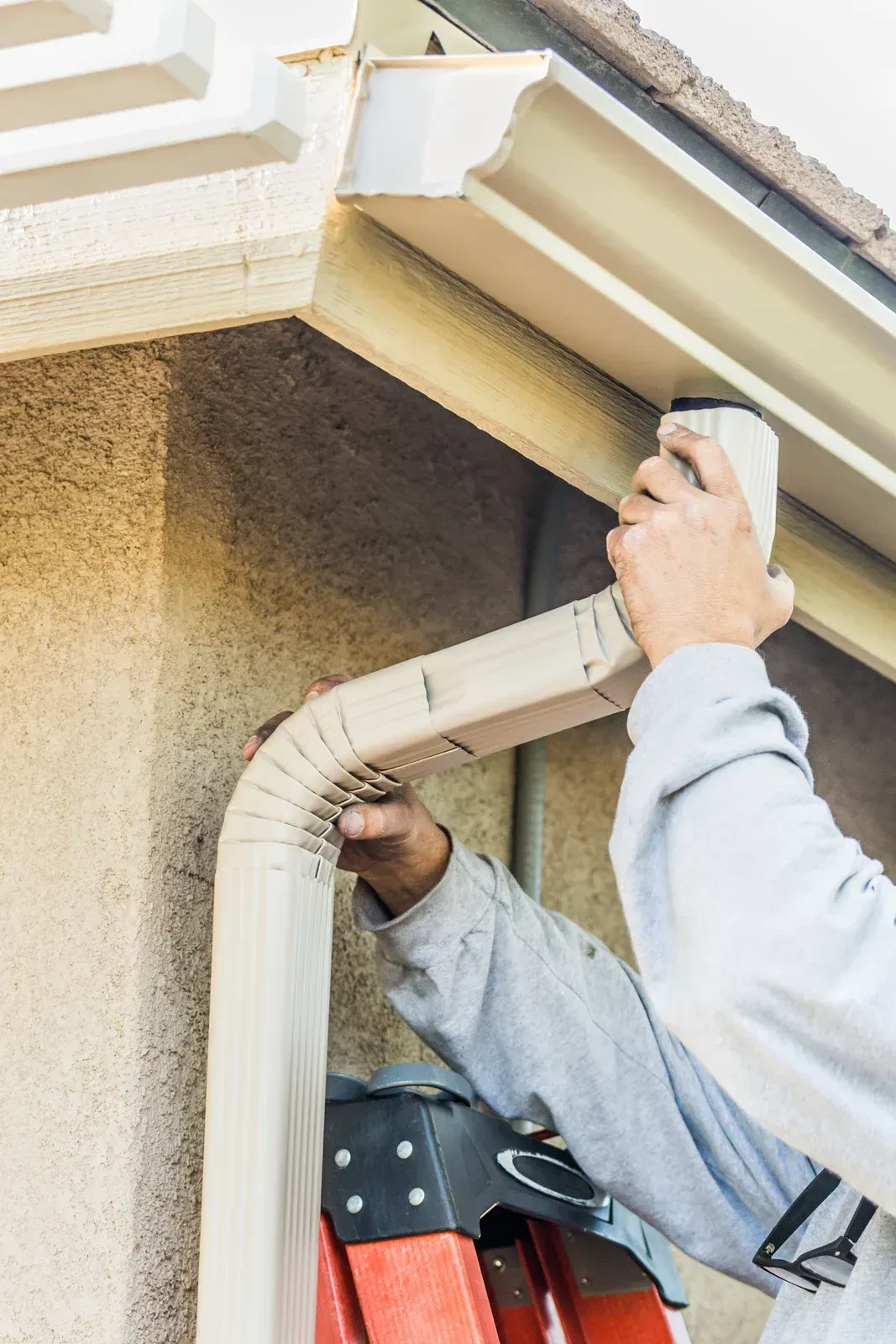
Joe's Gutters & Patios has been installing leaf guards and gutter protection systems across New Orleans, Louisiana for over 20 years, and we evaluate each roof before recommending a guard rather than applying a single product to every home. Our team accounts for roofing material, roof pitch, gutter sizing, and the specific debris load from Louisiana's live oaks, pines, and magnolias to specify protection that actually performs. Every installation is personally supervised by the owner to confirm the guards are mounted correctly for the roof they sit on, so the system keeps working through every storm season that follows.
Irregular surfaces change the geometry
3. Tile and Slate Roofs
In Greater New Orleans, the debris environment is as important as the roofing material. Live oak catkins, pine needles, and cypress needles are fine enough to slip through standard screens and perforated guards, defeating the entire purpose of installation. A micro-mesh guard blocks that fine material while still allowing water through, which makes it the most versatile option across shingle, metal, and tile roofs in this specific climate.
The one detail installers get wrong on shingle roofs is sliding a guard too far under the first course of shingles. Many shingle manufacturers warn that lifting shingles to insert a guard can void the roofing warranty. A properly installed system either attaches to the fascia or gutter lip or uses a low-profile design that does not disturb the roofing. On homes with granule shedding from aging shingles, micro-mesh performs better than open screens, since loose granules can pass through wider openings and settle in the trough.
Clay tile, concrete tile, and slate create a raised, uneven roof edge rather than the flat plane of a shingle roof. Water does not exit in a smooth sheet; it channels through the contours of the tile and can arrive at the gutter in concentrated streams. This affects where debris collects and how a guard needs to sit to catch the water without letting it jump the gutter.
Gutter Protection Built for Your Roof and Your Trees
2. Metal Roofs
Pitch and gutter sizing complete the system
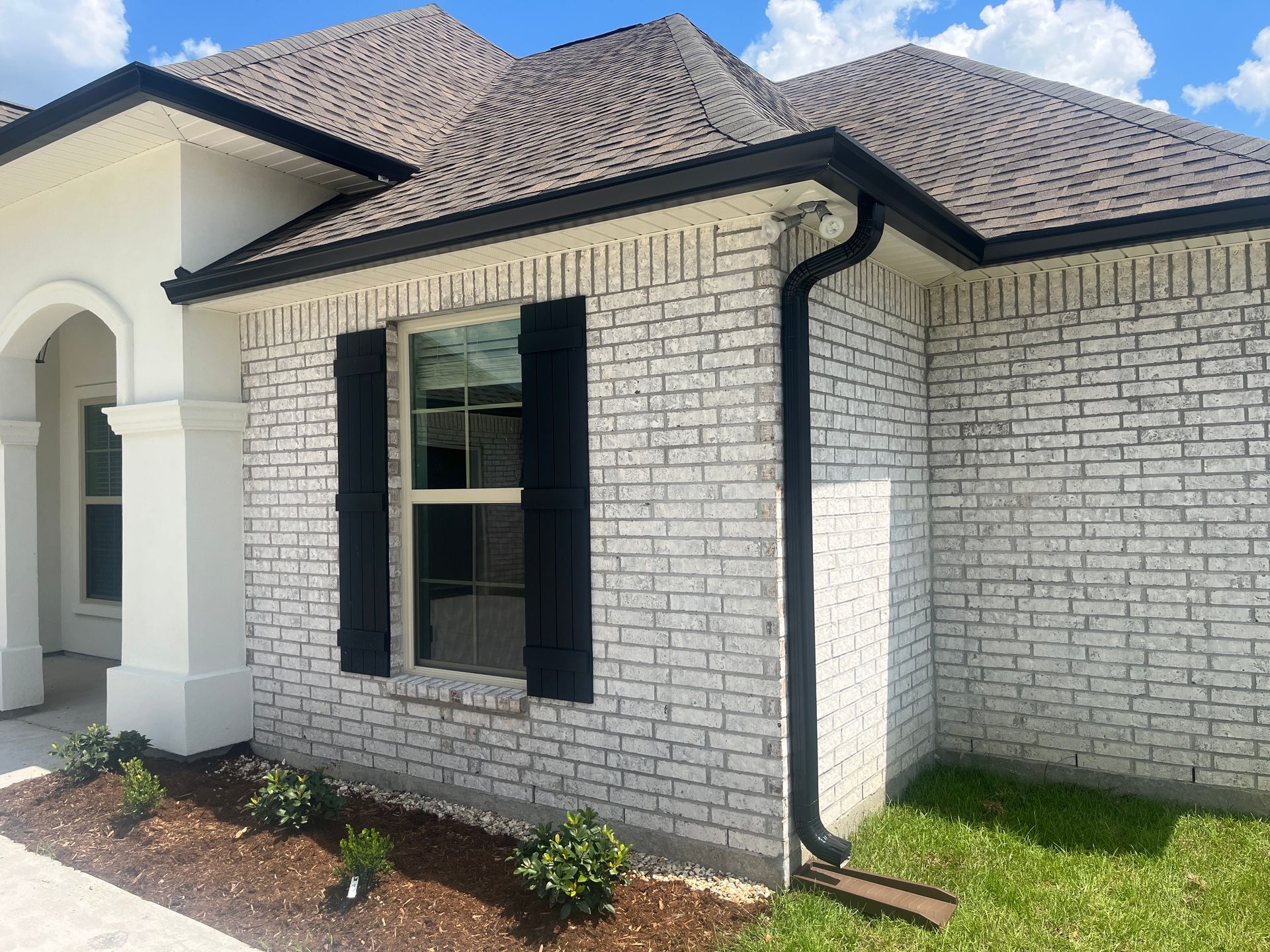
Asphalt shingles are the most common roofing material in the New Orleans area, and they are also the easiest surface to pair with gutter protection. The shingle edge sits close to the gutter, water sheds at a moderate speed, and most guard systems are engineered with this configuration in mind. Screen, micro-mesh, and surface-tension guards all have viable applications on shingle roofs when installed at the correct pitch.
Tile and slate crack under foot traffic and stress, so any guard installation on these roofs demands careful handling and, in many cases, guards that attach entirely to the gutter rather than anywhere near the roofing. Because tile roofs are common on higher-value custom homes in the region, matching the guard color and profile to the architecture also becomes a consideration. The heavier debris load from surrounding live oaks and magnolias still applies, so a fine-filtering guard remains the priority regardless of the premium roofing beneath it.
A guard installed on a low-slope roof behaves differently than the same guard on a steep pitch, where water arrives with more force. On any roof type, the guard has to be paired with correctly sized gutters and downspouts to handle Louisiana's rainfall volume. A guard that filters debris perfectly but sits above an undersized 5-inch gutter still overflows during a hard storm. The roof, the gutter, the downspouts, and the guard work as one system, and evaluating them together is what separates a lasting installation from a weekend project that fails in the first heavy rain.
Attachment requires care
Fragility limits attachment options
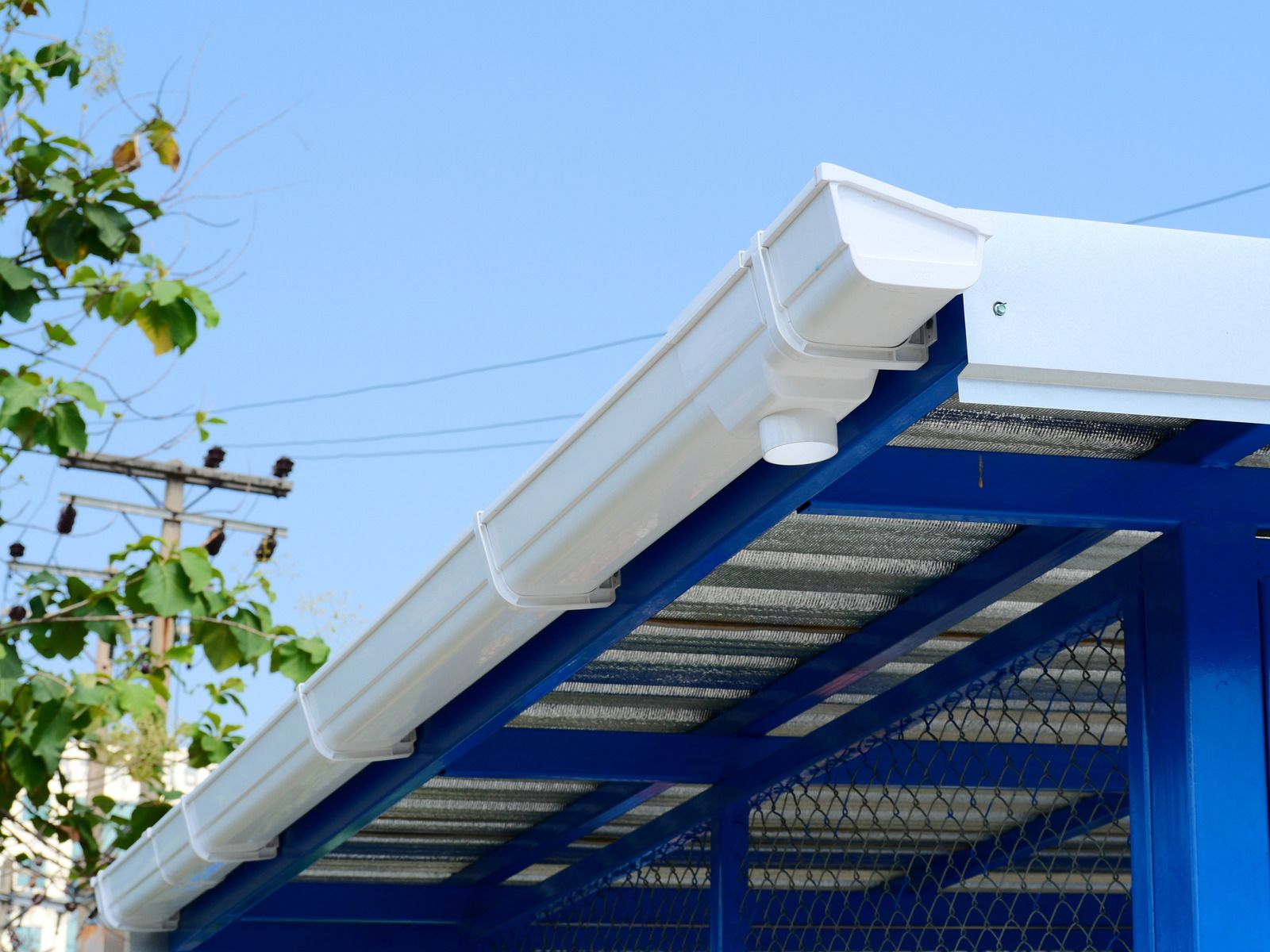
Standing-seam and corrugated metal roofs shed water dramatically faster than shingle roofs. During an intense Louisiana downpour, that velocity can carry water straight over a poorly matched guard and past the gutter. Surface-tension guards, which rely on water clinging to a curved nose to redirect it into the gutter, often struggle on steep metal because the water is moving too fast to follow the curve. On metal roofs, mesh and screen systems that let water drop directly into the trough tend to perform more reliably.
4. Matching the Guard to the Roof and the Trees
Speed is the defining factor
Watch the shingle overhang
1. Asphalt Shingle Roofs
The most forgiving surface for guards
Metal roofs cannot be penetrated casually. Screwing a guard bracket into a metal panel creates a potential leak point and can interfere with the roof's own drainage channels. The better approach mounts guards to the gutter and fascia rather than the roofing itself. Snow guards and ice are non-issues here, but the sheer volume and speed of runoff mean gutter and downspout sizing matter as much as the guard when the roof is metal.
A screen room is supposed to be the best seat in the house for a dog that wants to watch the yard and a cat that wants to nap in filtered sun. Then the dog leans into the screen to track a squirrel, a claw catches the mesh, and within a month there is a ragged hole big enough for every mosquito in the neighborhood to find. For pet owners across Greater New Orleans, standard screening built for insect protection alone rarely survives daily contact with animals. Building a screen room that works for a household with pets means planning for that contact from the start, not repairing the damage after.
The good news is that a screen room can absolutely stand up to dogs and cats when it is specified correctly. The difference lies in the screening material, the placement of that material, the framing details near ground level, and a few practical additions that make the space genuinely usable for animals. An aluminum-framed enclosure is already the durable choice for Louisiana's climate; adapting it for pets is a matter of choosing the right components rather than accepting whatever mesh comes standard.
1. Pet-Resistant Screen Mesh
Built to take a claw.
The core upgrade for any pet household is pet-resistant screen mesh. Where standard fiberglass insect screening tears easily under claws and teeth, pet-resistant mesh is woven from heavier, tightly bound fibers, often vinyl-coated polyester, engineered to resist scratching, pushing, and chewing. It is several times stronger than conventional screen and holds up to the daily pressure of a dog leaning against it or a cat testing it with its claws.
A fair trade in airflow.
Pet-resistant mesh is thicker than standard screen, so it allows slightly less airflow and visibility. In practice, most homeowners find the trade worthwhile, because a screen that survives the animals keeps the entire enclosure functional. A common approach installs pet-resistant mesh on the lower panels, where animals make contact, and standard insect screen higher up, preserving airflow and view where pets cannot reach.
2. Smart Panel Layout for Animals
Reinforce the zone pets actually touch.
Dogs and cats interact with the bottom two or three feet of a screen enclosure, not the full height. Designing the room with more durable materials or a solid kick panel in that lower zone concentrates the protection where the wear happens. A low aluminum or composite kick panel along the base takes the brunt of paws, tails, and repeated contact, keeping the vulnerable mesh above the animals' reach entirely.
Plan the doorway for the routine.
Pets move in and out constantly, so the door hardware and layout deserve thought. A well-positioned, self-closing door prevents an enclosure from being defeated by a screen left ajar, and heavier-duty door screening handles the traffic of animals brushing through. For households that want animals to come and go independently, a pet door integrated into a solid lower panel rather than the mesh itself preserves the enclosure's integrity.
3. Comfort and Safety Features
Shade and temperature.
Louisiana heat is hard on animals, and a screen room in full afternoon sun can become uncomfortable. Pairing the enclosure with an insulated patio cover overhead, or positioning it to catch shade during the hottest hours, keeps the space usable for pets through the summer. Good airflow through the screening helps, but shade from above does the heavy lifting on the worst days.
Secure the perimeter at ground level.
Determined dogs dig, and cats probe for gaps. A screen room intended to contain animals needs a well-sealed base where the framing meets the slab, with no gaps a paw can exploit or a small animal can slip through. Building the enclosure on a proper slab and sealing the base framing tightly turns the space into a genuinely secure spot where pets can be left safely rather than a barrier they learn to defeat.
4. Why Aluminum Framing Suits Pet Households
Durability that matches the demand.
Aluminum framing resists the corrosion, humidity, and UV exposure that define Louisiana's climate, and it carries pet-resistant screening without warping or rotting the way wood can. The rigidity of an aluminum frame keeps screen panels taut, which matters with pets, because loose or sagging mesh gives animals something to catch and pull. A tight, rigid frame is harder for a dog or cat to compromise in the first place.
Low maintenance for a high-traffic space.
A room used constantly by animals sees more wear and more mess than a typical enclosure. Aluminum wipes clean, does not absorb odors, and needs no repainting or sealing, which keeps a pet-heavy space sanitary and low-effort to maintain. Combined with washable, replaceable screen panels, the enclosure stays functional for years even under the daily demands of an active household with animals.
Frequently Asked Questions
What is pet-resistant screen mesh made of?
Pet-resistant mesh is typically woven from heavier, vinyl-coated polyester fibers that are far stronger than standard fiberglass insect screening. That construction resists the scratching, pushing, and chewing that quickly tears conventional screen. It is several times more durable while still allowing airflow and visibility, with only a modest trade in each.
How do I keep a dog from tearing through a screen room?
The most effective approach combines pet-resistant mesh in the lower panels with a solid kick panel along the base where animals make contact. Keeping the vulnerable mesh above the reach of paws, and mounting it on a rigid aluminum frame that holds the screen taut, removes the loose material a dog can catch and pull. A well-fitted, self-closing door completes the protection.
Can I add a pet door to a screen room?
Yes. The best method installs the pet door into a solid lower panel rather than cutting it into the mesh, which preserves the enclosure's integrity. This gives animals independent access without creating a weak point in the screening. It is a common and practical addition for households that want pets to come and go.
Are aluminum screen rooms good for hot Louisiana summers?
Aluminum framing handles the heat and humidity well, but comfort for pets depends heavily on shade. Pairing the enclosure with an insulated patio cover overhead, or positioning it out of the harshest afternoon sun, keeps the space usable through summer. Good airflow through the screening helps, though overhead shade does the most to control temperature.
How do I stop a dog from digging out under a screen room?
Build the enclosure on a proper slab and seal the base framing tightly where it meets the concrete, leaving no gap a paw can exploit. A well-sealed perimeter at ground level is what turns a screen room into a space where animals can be left securely rather than a barrier they learn to dig under. This detail matters as much as the screening above it.
Frequently Asked Questions
An Enclosure the Whole Household Can Use
A screen room built for pets is not a different structure so much as a smarter specification of the same one. Pet-resistant mesh in the contact zone, a durable kick panel at the base, a well-planned door, shade overhead, and a tightly sealed perimeter turn a standard enclosure into a space that dogs and cats can use every day without destroying it. The aluminum frame that makes sense for Louisiana's weather is the same frame that gives pet-resistant screening the rigid, taut mounting it needs to last.
Joe's Gutters & Patios
has been building aluminum screen rooms and enclosures across New Orleans, Louisiana for over 20 years, and we regularly design them for households with dogs and cats. We specify pet-resistant screening, reinforced lower panels, secure base framing, and doorways suited to constant animal traffic, all on aluminum framing built for the region's heat and humidity. Every enclosure is personally supervised by the owner, so the finished room holds up to the pets that use it and stays comfortable through Louisiana's long warm season.
Recent Posts