Fixed Aluminum Awnings vs. Fabric Awnings: Why Aluminum Wins in Louisiana
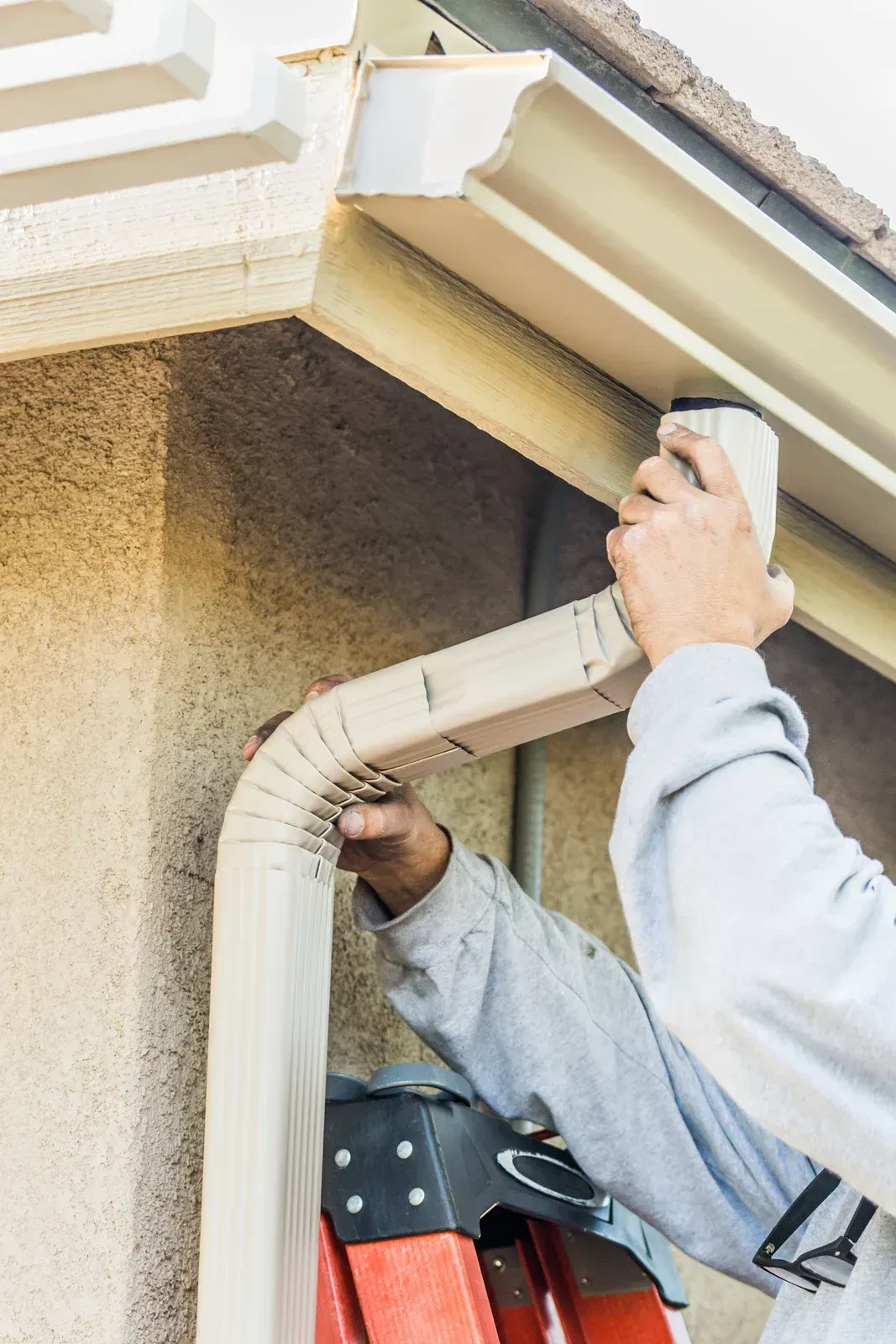
A homeowner in Metairie installs a set of gutter guards over a weekend, confident the clogging problem is solved for good. Two storms later, water is sheeting off the roof edge and skipping the gutter entirely. The guards were not defective. They were simply the wrong system for a steep metal roof, mounted in a way that never accounted for how fast water moves off that surface. This scenario plays out constantly across Greater New Orleans, because gutter guards are not a universal product that performs identically on every home.
Roof type shapes almost everything about how a guard performs: how the panel attaches, how water enters the gutter, and how debris behaves once it lands. A guard that excels on an asphalt shingle roof can fail on tile or metal if the installer ignores the differences. Understanding how each common roofing material interacts with gutter protection helps homeowners avoid the frustration of paying for a system that looks right but drains poorly during the heavy rainfall Louisiana delivers month after month.
Roof type is only half the equation
Gutter guards do work with metal, shingle, and tile roofs, but not the same guard installed the same way on all three. The roofing material determines how water leaves the roof, how the guard attaches, and which debris the system has to reject. Getting that match right is the difference between a guard that eliminates cleaning for years and one that quietly redirects water in ways that damage fascia and foundation. A professional assessment of your specific roof, gutter size, and surrounding tree cover is the only reliable way to choose correctly.
Joe's Gutters & Patios has been installing leaf guards and gutter protection systems across New Orleans, Louisiana for over 20 years, and we evaluate each roof before recommending a guard rather than applying a single product to every home. Our team accounts for roofing material, roof pitch, gutter sizing, and the specific debris load from Louisiana's live oaks, pines, and magnolias to specify protection that actually performs. Every installation is personally supervised by the owner to confirm the guards are mounted correctly for the roof they sit on, so the system keeps working through every storm season that follows.
Irregular surfaces change the geometry
3. Tile and Slate Roofs
In Greater New Orleans, the debris environment is as important as the roofing material. Live oak catkins, pine needles, and cypress needles are fine enough to slip through standard screens and perforated guards, defeating the entire purpose of installation. A micro-mesh guard blocks that fine material while still allowing water through, which makes it the most versatile option across shingle, metal, and tile roofs in this specific climate.
The one detail installers get wrong on shingle roofs is sliding a guard too far under the first course of shingles. Many shingle manufacturers warn that lifting shingles to insert a guard can void the roofing warranty. A properly installed system either attaches to the fascia or gutter lip or uses a low-profile design that does not disturb the roofing. On homes with granule shedding from aging shingles, micro-mesh performs better than open screens, since loose granules can pass through wider openings and settle in the trough.
Clay tile, concrete tile, and slate create a raised, uneven roof edge rather than the flat plane of a shingle roof. Water does not exit in a smooth sheet; it channels through the contours of the tile and can arrive at the gutter in concentrated streams. This affects where debris collects and how a guard needs to sit to catch the water without letting it jump the gutter.
Gutter Protection Built for Your Roof and Your Trees
2. Metal Roofs
Pitch and gutter sizing complete the system
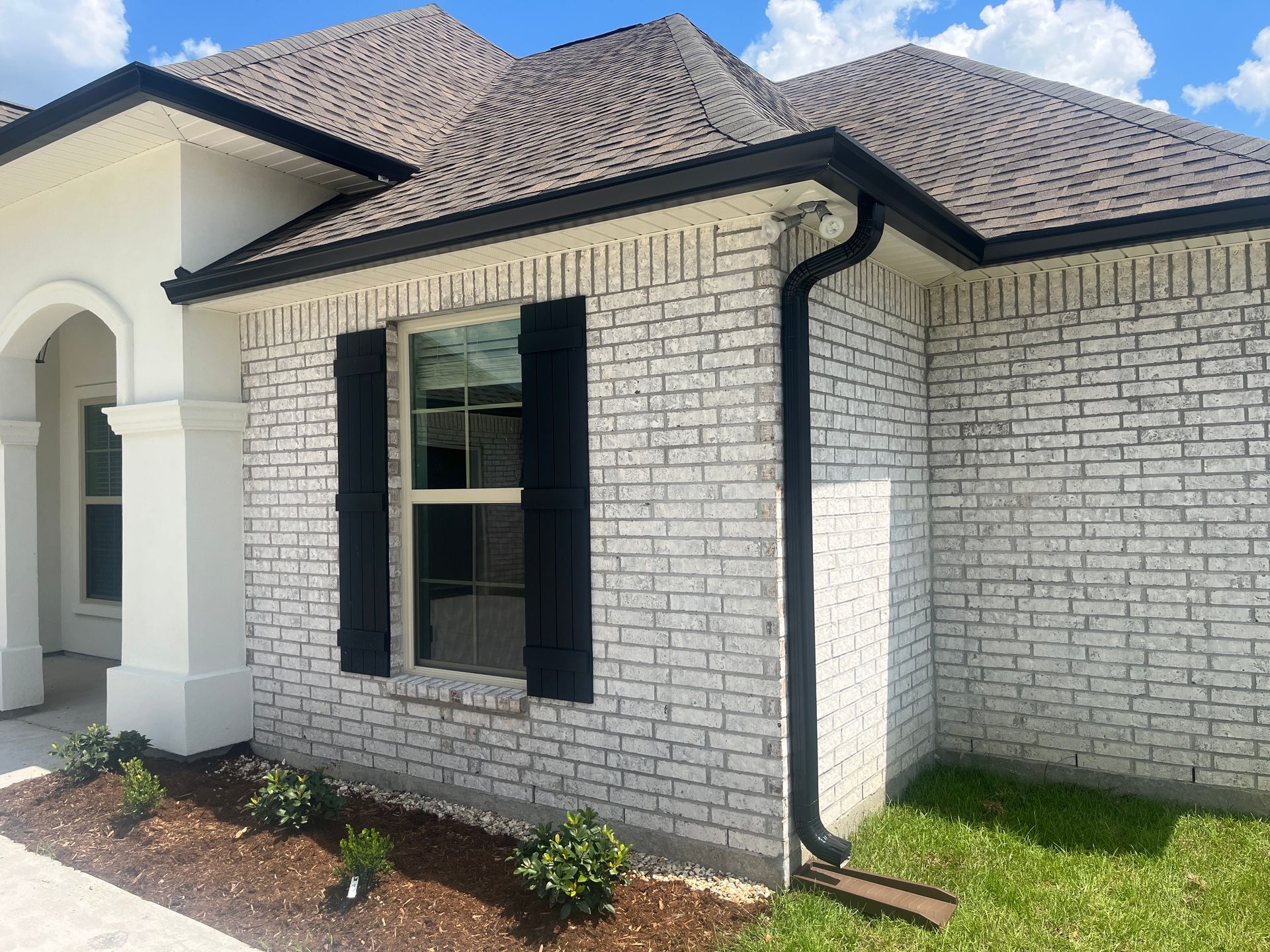
Asphalt shingles are the most common roofing material in the New Orleans area, and they are also the easiest surface to pair with gutter protection. The shingle edge sits close to the gutter, water sheds at a moderate speed, and most guard systems are engineered with this configuration in mind. Screen, micro-mesh, and surface-tension guards all have viable applications on shingle roofs when installed at the correct pitch.
Tile and slate crack under foot traffic and stress, so any guard installation on these roofs demands careful handling and, in many cases, guards that attach entirely to the gutter rather than anywhere near the roofing. Because tile roofs are common on higher-value custom homes in the region, matching the guard color and profile to the architecture also becomes a consideration. The heavier debris load from surrounding live oaks and magnolias still applies, so a fine-filtering guard remains the priority regardless of the premium roofing beneath it.
A guard installed on a low-slope roof behaves differently than the same guard on a steep pitch, where water arrives with more force. On any roof type, the guard has to be paired with correctly sized gutters and downspouts to handle Louisiana's rainfall volume. A guard that filters debris perfectly but sits above an undersized 5-inch gutter still overflows during a hard storm. The roof, the gutter, the downspouts, and the guard work as one system, and evaluating them together is what separates a lasting installation from a weekend project that fails in the first heavy rain.
Attachment requires care
Fragility limits attachment options
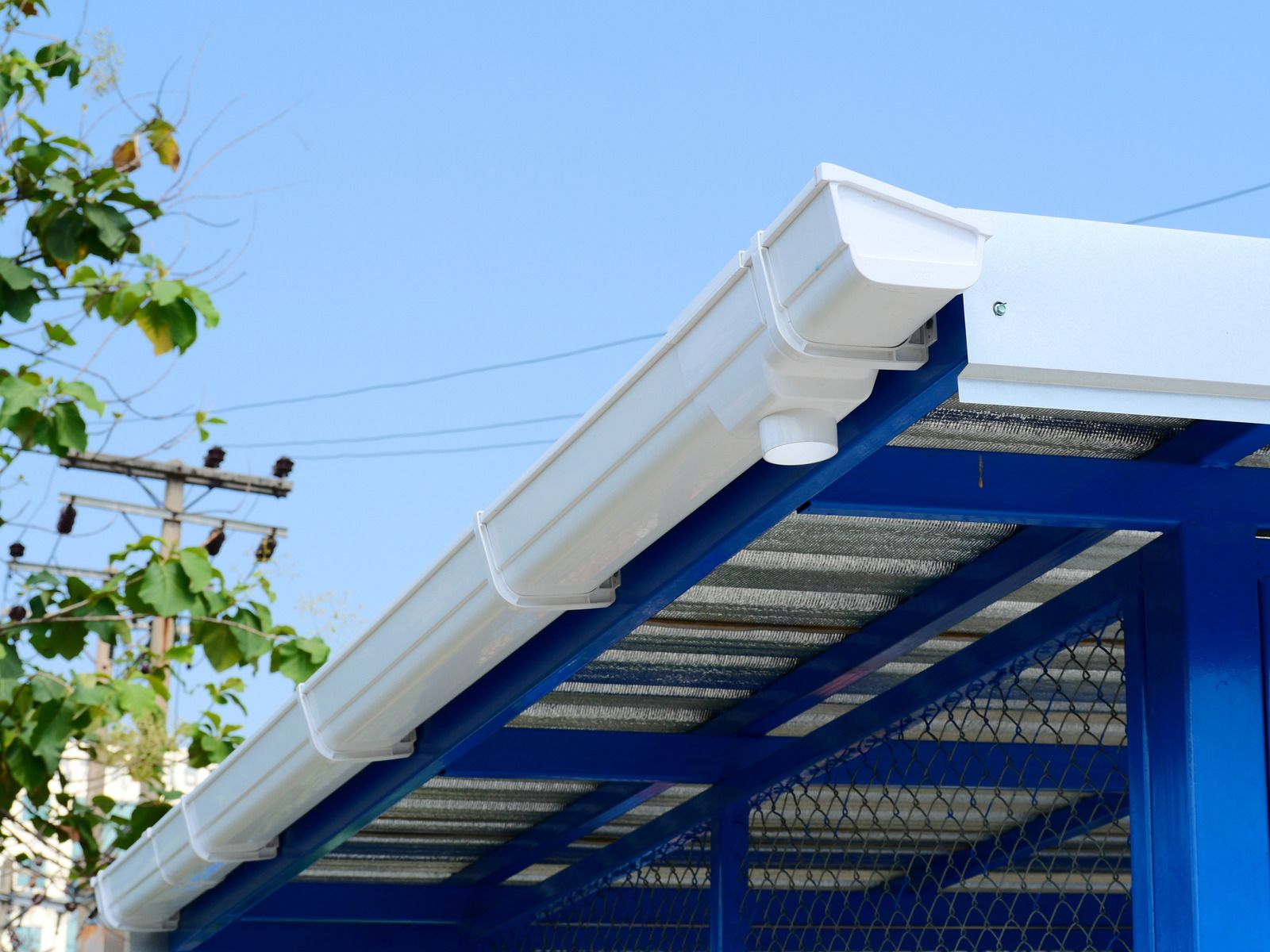
Standing-seam and corrugated metal roofs shed water dramatically faster than shingle roofs. During an intense Louisiana downpour, that velocity can carry water straight over a poorly matched guard and past the gutter. Surface-tension guards, which rely on water clinging to a curved nose to redirect it into the gutter, often struggle on steep metal because the water is moving too fast to follow the curve. On metal roofs, mesh and screen systems that let water drop directly into the trough tend to perform more reliably.
4. Matching the Guard to the Roof and the Trees
Speed is the defining factor
Watch the shingle overhang
1. Asphalt Shingle Roofs
The most forgiving surface for guards
Metal roofs cannot be penetrated casually. Screwing a guard bracket into a metal panel creates a potential leak point and can interfere with the roof's own drainage channels. The better approach mounts guards to the gutter and fascia rather than the roofing itself. Snow guards and ice are non-issues here, but the sheer volume and speed of runoff mean gutter and downspout sizing matter as much as the guard when the roof is metal.
The fabric awning over a front door in New Orleans starts out crisp and colorful. By the second summer, the color has faded on the sun-facing side. By the third, the fabric has begun to sag, and a corner shows the first small tear where the material meets the frame. After a strong storm, it needs restretching or replacement entirely. Meanwhile, the fixed aluminum awning on the house next door looks the same as the day it went up. This contrast is not an accident. It is the predictable result of two very different materials meeting the same demanding climate.
Louisiana subjects any exterior product to a punishing combination of intense UV exposure, high heat, heavy humidity, frequent heavy rain, and tropical storm winds. Fabric and aluminum respond to those conditions in fundamentally different ways over time. For homeowners deciding between the two, the choice comes down to how each material ages in this specific environment and what kind of maintenance and replacement cycle they are willing to accept. Understanding those differences makes the long-term picture clear well before the fabric awning has faded.
1. How Each Material Handles Louisiana's Climate
UV and heat degrade fabric first
Awning fabric, even treated fabric, absorbs the sun's ultraviolet radiation, and over years of Louisiana exposure that radiation breaks down both the color and the fibers. Fading is the visible symptom; weakening of the material is the structural one. Aluminum does not degrade under UV the way fabric does. A quality painted or powder-coated aluminum awning holds its finish and its strength through the same sun that steadily wears fabric down.
Humidity and biological growth
Louisiana's humidity is hard on fabric in a second way. Damp fabric that stays shaded and slow to dry becomes a host for mildew, mold, and algae, leaving stains and odors that require regular cleaning to control. Aluminum sheds water, dries quickly, and gives mold nothing to grow into. In a climate where humidity is a constant rather than a season, that difference shows up as a real gap in maintenance effort year after year.
2. Durability Through Storm Season
Wind is the decisive test
Tropical storms and hurricanes are a defining feature of life in the New Orleans area, and awnings sit exposed on the front of the house when those winds arrive. Fabric awnings catch wind, and the material, seams, and mounting are all points that can fail or tear under storm loads. A properly engineered and anchored fixed aluminum awning is a rigid structure designed to resist those forces, with no fabric to catch the wind and no seams to give way.
A permanent structure versus a consumable
A fixed aluminum awning is a permanent architectural element, built and anchored to stay. Fabric awnings, by their nature, are closer to a consumable product, expected to be recovered or replaced on a cycle as the material wears out. Over the life of a home, that distinction translates into a single durable installation on one side and a recurring expense on the other.
3. Maintenance and Long-Term Cost
What each material asks of you
Fabric awnings require periodic cleaning to manage mildew and staining, occasional restretching as the material relaxes, and eventual recovering or replacement when the fabric fails. Fixed aluminum awnings ask for very little: an occasional rinse to keep them clean and a look at the fasteners and anchoring after major storms. The ongoing labor and expense over the years favor aluminum substantially in Louisiana's conditions.
The real comparison is over time
A fabric awning may carry a lower initial price in some cases, but the honest comparison accounts for the replacement cycle. When a product has to be recovered or replaced every several years while the alternative keeps performing, the lower upfront cost erodes quickly. Aluminum's value is in the years it delivers without fading, sagging, tearing, or needing to be redone, which is exactly where fabric struggles in this climate.
4. Function and Appearance
Protection that stays consistent
An awning's job is to shade a door, window, or entry and to shed rain away from it. Aluminum performs that job identically in year ten as it did on day one, because its shape and integrity do not change. A fabric awning's protection diminishes as the material sags and thins, so the shade and rain protection it provides slowly degrade along with its appearance.
Curb appeal that lasts
Fabric awnings offer a range of colors and a softer look that some homeowners prefer initially, but that appearance is temporary in Louisiana's sun. Fixed aluminum awnings are available in a range of finishes and colors chosen to complement the home, and crucially, they keep that appearance. An awning that still looks intentional and well-kept after a decade contributes to curb appeal in a way a faded, sagging one cannot.
Frequently Asked Questions
How long do aluminum awnings last compared to fabric?
A quality fixed aluminum awning holds its finish and structure for many years in Louisiana's climate, while fabric awnings typically enter a recovering or replacement cycle every several years as the material fades, sags, and weakens. The exact figures depend on product quality and installation, but the gap in service life is substantial in this environment.
Do aluminum awnings fade in the sun?
Quality painted or powder-coated aluminum resists UV fading far better than fabric, holding its color through the same sun that steadily bleaches awning fabric. No exterior finish is entirely immune to the sun over decades, but aluminum's resistance is in a different class from fabric in Louisiana's intense UV exposure.
Can aluminum awnings withstand hurricanes?
A properly engineered and anchored fixed aluminum awning is a rigid structure built to resist storm winds, with no fabric to catch the wind and no seams to tear. Fabric awnings, by contrast, catch wind and have multiple failure points under storm loads. Correct anchoring for local wind requirements is what makes an aluminum awning storm-ready.
Are aluminum awnings worth the higher upfront cost?
Over the life of a home, aluminum's minimal maintenance and long service life typically outweigh a fabric awning's lower initial price, since fabric has to be cleaned, restretched, and eventually replaced. The honest comparison accounts for that replacement cycle rather than the first invoice alone. In Louisiana's conditions, the durable material usually wins on total cost.
Do aluminum awnings require much maintenance?
Very little. An occasional rinse to keep them clean and a look at the fasteners and anchoring after major storms is generally all a fixed aluminum awning needs. There is no fabric to clean of mildew, no material to restretch, and no recovering cycle, which is a large part of why aluminum is the low-effort choice in this climate.
Frequently Asked Questions
An Enclosure the Whole Household Can Use
Fabric awnings and fixed aluminum awnings both shade an entry, but only one is built for the way Louisiana's sun, humidity, and storms actually behave. Fabric fades, hosts mildew, sags, tears in wind, and enters a replacement cycle. Fixed aluminum holds its finish and structure through the same conditions, asks for minimal maintenance, and stays put through storm season as a permanent part of the house. For a climate this demanding, the durable material is the one that makes sense over the life of the home.
Joe's Gutters & Patios
installs fixed, permanent aluminum awnings for doors and entry points across New Orleans, Louisiana, built specifically for Louisiana's intense UV environment where fabric and wood alternatives deteriorate quickly. We have protected homes in this climate for over 20 years, and we anchor and engineer every awning to hold up through the region's heat and storm seasons. Each installation is personally supervised by the owner, so the awning that goes on your home is one built to keep its finish and its function for years rather than fade with the first few summers.
Recent Posts