Partial vs. Full Gutter Replacement: How to Know Which Your Home Needs
A homeowner in Metairie installs a set of gutter guards over a weekend, confident the clogging problem is solved for good. Two storms later, water is sheeting off the roof edge and skipping the gutter entirely. The guards were not defective. They were simply the wrong system for a steep metal roof, mounted in a way that never accounted for how fast water moves off that surface. This scenario plays out constantly across Greater New Orleans, because gutter guards are not a universal product that performs identically on every home.
Roof type shapes almost everything about how a guard performs: how the panel attaches, how water enters the gutter, and how debris behaves once it lands. A guard that excels on an asphalt shingle roof can fail on tile or metal if the installer ignores the differences. Understanding how each common roofing material interacts with gutter protection helps homeowners avoid the frustration of paying for a system that looks right but drains poorly during the heavy rainfall Louisiana delivers month after month.
Roof type is only half the equation
Gutter guards do work with metal, shingle, and tile roofs, but not the same guard installed the same way on all three. The roofing material determines how water leaves the roof, how the guard attaches, and which debris the system has to reject. Getting that match right is the difference between a guard that eliminates cleaning for years and one that quietly redirects water in ways that damage fascia and foundation. A professional assessment of your specific roof, gutter size, and surrounding tree cover is the only reliable way to choose correctly.
Joe's Gutters & Patios has been installing leaf guards and gutter protection systems across New Orleans, Louisiana for over 20 years, and we evaluate each roof before recommending a guard rather than applying a single product to every home. Our team accounts for roofing material, roof pitch, gutter sizing, and the specific debris load from Louisiana's live oaks, pines, and magnolias to specify protection that actually performs. Every installation is personally supervised by the owner to confirm the guards are mounted correctly for the roof they sit on, so the system keeps working through every storm season that follows.
Irregular surfaces change the geometry
3. Tile and Slate Roofs
In Greater New Orleans, the debris environment is as important as the roofing material. Live oak catkins, pine needles, and cypress needles are fine enough to slip through standard screens and perforated guards, defeating the entire purpose of installation. A micro-mesh guard blocks that fine material while still allowing water through, which makes it the most versatile option across shingle, metal, and tile roofs in this specific climate.
The one detail installers get wrong on shingle roofs is sliding a guard too far under the first course of shingles. Many shingle manufacturers warn that lifting shingles to insert a guard can void the roofing warranty. A properly installed system either attaches to the fascia or gutter lip or uses a low-profile design that does not disturb the roofing. On homes with granule shedding from aging shingles, micro-mesh performs better than open screens, since loose granules can pass through wider openings and settle in the trough.
Clay tile, concrete tile, and slate create a raised, uneven roof edge rather than the flat plane of a shingle roof. Water does not exit in a smooth sheet; it channels through the contours of the tile and can arrive at the gutter in concentrated streams. This affects where debris collects and how a guard needs to sit to catch the water without letting it jump the gutter.
Gutter Protection Built for Your Roof and Your Trees
2. Metal Roofs
Pitch and gutter sizing complete the system
Asphalt shingles are the most common roofing material in the New Orleans area, and they are also the easiest surface to pair with gutter protection. The shingle edge sits close to the gutter, water sheds at a moderate speed, and most guard systems are engineered with this configuration in mind. Screen, micro-mesh, and surface-tension guards all have viable applications on shingle roofs when installed at the correct pitch.
Tile and slate crack under foot traffic and stress, so any guard installation on these roofs demands careful handling and, in many cases, guards that attach entirely to the gutter rather than anywhere near the roofing. Because tile roofs are common on higher-value custom homes in the region, matching the guard color and profile to the architecture also becomes a consideration. The heavier debris load from surrounding live oaks and magnolias still applies, so a fine-filtering guard remains the priority regardless of the premium roofing beneath it.
A guard installed on a low-slope roof behaves differently than the same guard on a steep pitch, where water arrives with more force. On any roof type, the guard has to be paired with correctly sized gutters and downspouts to handle Louisiana's rainfall volume. A guard that filters debris perfectly but sits above an undersized 5-inch gutter still overflows during a hard storm. The roof, the gutter, the downspouts, and the guard work as one system, and evaluating them together is what separates a lasting installation from a weekend project that fails in the first heavy rain.
Attachment requires care
Fragility limits attachment options
Standing-seam and corrugated metal roofs shed water dramatically faster than shingle roofs. During an intense Louisiana downpour, that velocity can carry water straight over a poorly matched guard and past the gutter. Surface-tension guards, which rely on water clinging to a curved nose to redirect it into the gutter, often struggle on steep metal because the water is moving too fast to follow the curve. On metal roofs, mesh and screen systems that let water drop directly into the trough tend to perform more reliably.
4. Matching the Guard to the Roof and the Trees
Speed is the defining factor
Watch the shingle overhang
1. Asphalt Shingle Roofs
The most forgiving surface for guards
Metal roofs cannot be penetrated casually. Screwing a guard bracket into a metal panel creates a potential leak point and can interfere with the roof's own drainage channels. The better approach mounts guards to the gutter and fascia rather than the roofing itself. Snow guards and ice are non-issues here, but the sheer volume and speed of runoff mean gutter and downspout sizing matter as much as the guard when the roof is metal.
A single sagging corner over the back patio does not always mean the whole system has to come down. Neither does a leaky joint near the downspout. Yet homeowners across Jefferson and Orleans Parish regularly face the same decision after a storm or a failed inspection: repair the section that is clearly failing, or replace the entire run. Guess wrong in one direction and you pour money into patching a system that is already past its service life. Guess wrong in the other and you replace serviceable gutters that had years of performance left.
The right answer depends on the age of the system, how it was originally built, and whether the failure is isolated or a symptom of a larger problem. Sectional gutters fail differently than seamless ones. Corner joints fail before straight runs. And in Louisiana's climate, where 62 inches of annual rainfall and relentless heat accelerate every weakness, the calculus tilts differently than it would in a drier region. Knowing what to look for helps homeowners spend on the solution that actually protects the house rather than the one that simply looks cheaper on the first estimate.
1. When Partial Replacement Makes Sense
Isolated, physical damage
The clearest case for partial replacement is localized damage with an obvious cause. A tree limb falls during a storm and crushes one run along the side of the house. A ladder dents a section. A single length pulls away from the fascia after a bracket fails. When the surrounding gutters are sound and the damage has a specific, contained source, replacing the affected run makes financial sense without touching the rest of the system.
Matching matters
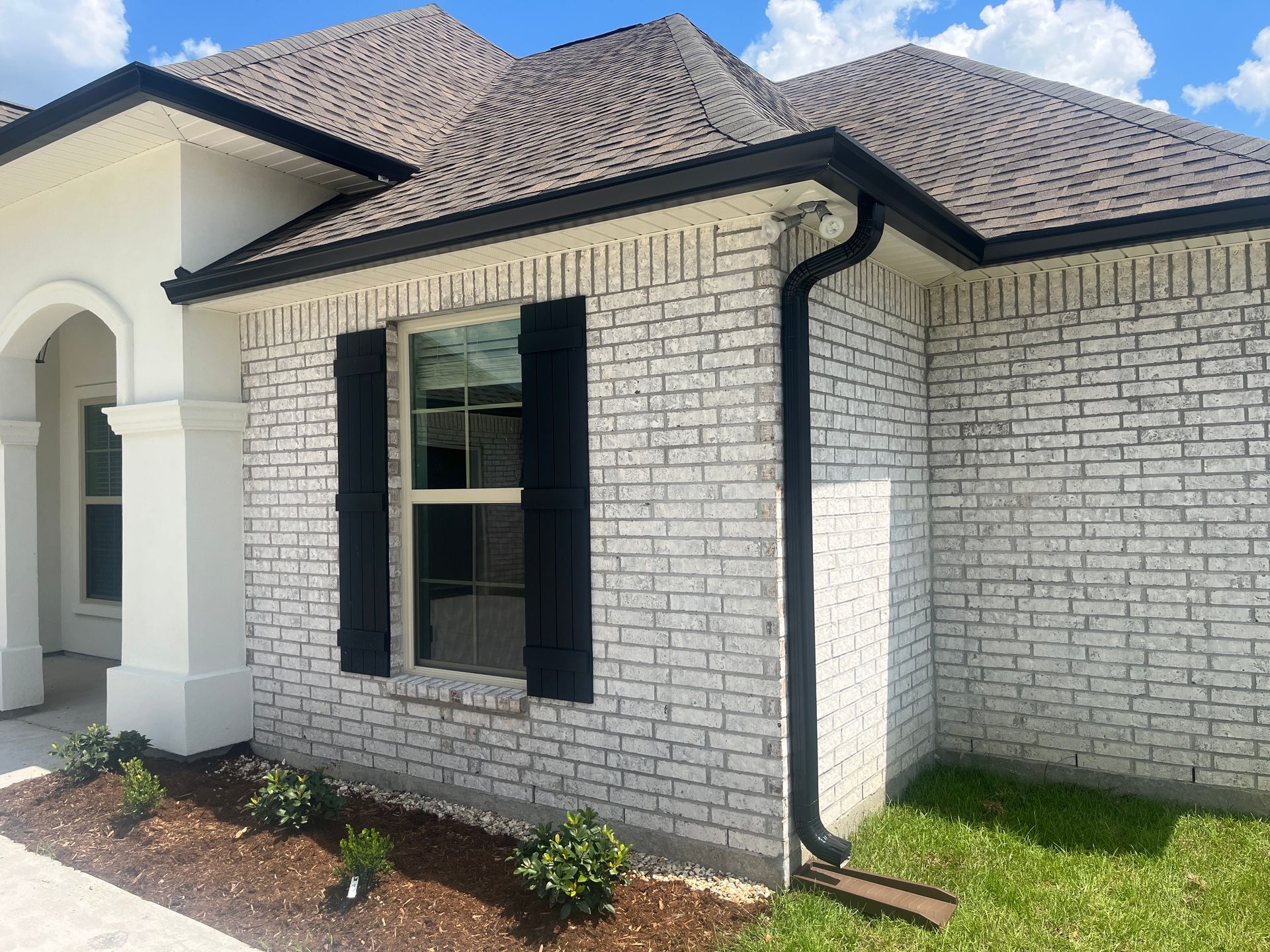
Partial replacement works best when the existing gutters are relatively recent and can be matched in profile, size, and color. Joe's installs 6-inch seamless aluminum with a wide range of color options, so a newer system can often be extended or repaired with material that blends cleanly. The complication arises with older or discontinued profiles, where a new section may not match the aging runs beside it in either dimension or finish, leaving a visible seam in both appearance and performance.
2. When Full Replacement Is the Better Value
Age and cumulative failure
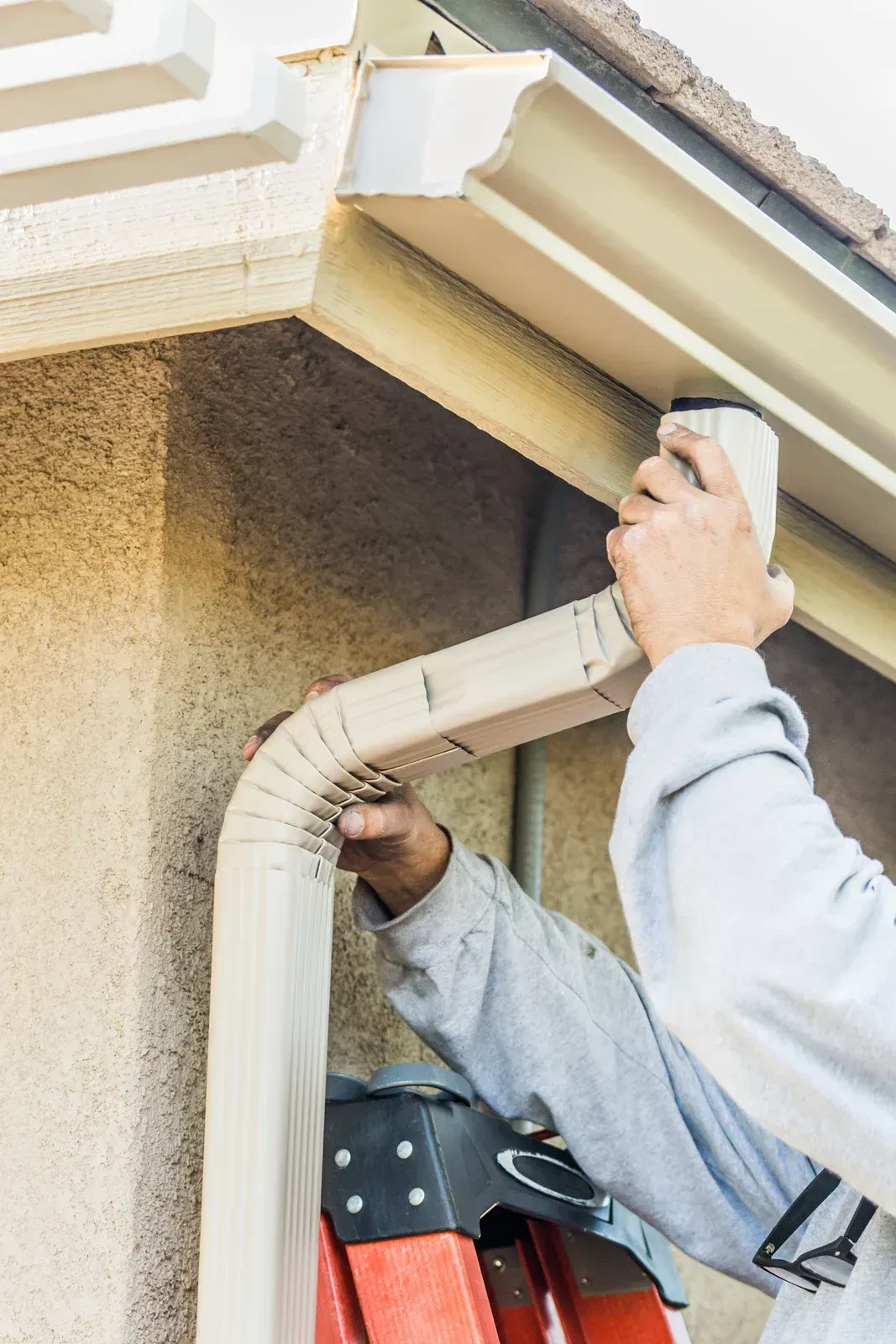
When gutters reach the end of their service life, problems stop being isolated. Sealant fails at multiple joints, hangers loosen along entire runs, and corners separate one after another. At that point, repairing individual failures becomes an endless cycle, because the next weak point is always about to give. If a system is old enough that one failure is quickly followed by another in a different spot, full replacement almost always costs less over the following few years than repeated repairs.
Sectional systems with failing joints
Older sectional gutters are assembled from lengths joined by connectors and miter strips, and every joint is a potential leak. Louisiana's heat cycle degrades the caulk in those joints within a few years, and once several corners begin leaking, re-caulking is a temporary fix at best. Replacing a joint-heavy sectional system with custom-formed seamless gutters eliminates the failure points entirely rather than resealing them one at a time. When the underlying design is the problem, patching the design does not solve it.
3. Reading the Warning Signs Correctly
Distinguish symptom from cause
Overflow, staining on the fascia, and pooling near the foundation are symptoms. The task is identifying whether the cause is contained or systemic. Overflow at one corner during heavy rain might mean a single clogged downspout or a failed miter, both repairable. Overflow at multiple points along different runs usually points to undersized gutters or a system that is failing across the board, which repair cannot correct.
Look behind the gutter, not just at it
Soft or stained fascia boards behind the gutter line reveal how long water has been escaping and where. If the wood damage is confined to one area, the failure is likely localized. If fascia deterioration appears at several points around the house, water has been escaping the system broadly, and a full replacement paired with any needed fascia repair protects the structure more reliably than spot fixes that leave the surrounding problem areas in place.
4. Getting an Honest Assessment
A repair-first mindset from the contractor
A trustworthy assessment does not default to the largest possible job. The right approach diagnoses the actual cause of the failure and recommends the smallest effective solution, whether that is a repair, a partial run, or a full replacement. Joe's Gutters approaches every diagnosis this way, telling homeowners honestly whether a section can be repaired or whether the system has failed structurally and replacement is the smarter long-term value.
Factor in the full system
The decision should account for gutter size, downspout placement, and how the system drains, not just the visible damage. If existing gutters are undersized 5-inch runs that overflow regardless of their condition, replacing a single section with the same undersized profile solves nothing. A proper evaluation looks at whether the system is capable of handling Louisiana rainfall in the first place, because that answer often reframes the entire repair-versus-replace question.
Frequently Asked Questions
How long do seamless aluminum gutters last in Louisiana?
With correct installation and periodic maintenance, quality seamless aluminum gutters commonly last a couple of decades or more, even in Louisiana's demanding climate. Service life depends heavily on how the corners were sealed, how the hangers were spaced, and whether the system was sized for local rainfall. Poorly built systems fail far sooner, which is often what prompts a replacement decision.
Is it cheaper to repair or replace gutters?
For isolated, physical damage on an otherwise sound system, repair is cheaper. Once failures become recurring, or the system is aging and joint-heavy, repeated repairs cost more over a few years than a single full replacement. The honest comparison looks at the total spend over time, not just the price of the next fix.
Can new gutters be matched to my existing ones?
Often, yes, when the existing gutters are a current profile and color that can be matched. Older or discontinued profiles can be harder to blend, leaving a visible difference in size or finish. A contractor can tell you during assessment whether a clean match is realistic for your system.
What are the signs my whole gutter system needs replacing?
Overflow at multiple points, failing sealant at several joints, loosening hangers along entire runs, and fascia deterioration in more than one area all point to systemic failure rather than an isolated problem. When one failure is quickly followed by another elsewhere, the system is telling you it has reached the end of its service life.
Should I replace 5-inch gutters with 6-inch during a replacement?
For most Louisiana homes, yes. The 5-inch profile is undersized for the region's 62-plus inches of annual rainfall, so replacing failed gutters with the same undersized size often solves the symptom without fixing the capacity problem. A replacement is the natural moment to size the system correctly for local rainfall.
Frequently Asked Questions
Choosing the Solution That Actually Protects the House
Partial replacement is the right call for isolated, physical damage on an otherwise sound and matchable system. Full replacement wins when failures are cumulative, the system is aging, or the underlying sectional design is the source of recurring leaks. The mistake homeowners make is treating every failure as either always-repairable or always-total, when the honest answer depends on the specific cause, the age of the system, and whether the gutters are even sized correctly for the rainfall they handle. A careful diagnosis prevents both wasted repairs and premature replacement.
Joe's Gutters & Patios
has been repairing and
replacing gutter systems
across New Orleans, Louisiana for over 20 years, and every job starts with an honest diagnosis rather than an automatic push toward the biggest quote. We identify the real cause of the failure, tell you clearly whether repair or replacement makes more sense for your situation, and size any new work correctly for Louisiana's rainfall. Every project is supervised personally by the owner, so the recommendation you receive is the one we would choose for our own home.
Recent Posts