Round vs Rectangular Downspouts: Opening Size Decides

The gutter fills fastest at the downspout end, the front lip starts spilling in a hard burst, and the pipe on the wall looks perfectly fine. Staring at that pipe, the natural question is whether its shape is the problem, and whether switching from rectangular to round, or the other way, would drain better. Shape plays a smaller role than that question assumes. What a downspout can carry comes from the area of its opening and from the outlet feeding it, and the table below maps common ground-level symptoms back to those two things.
| What you see from the ground | What it points toward |
|---|---|
| A 2x3 drop spills at its outlet end while the bottom of the pipe runs full | A 6-square-inch opening taking more water than it can pass |
| A round pipe joined to a rectangular outlet through an adapter, spilling at that end | The adapter's narrowest point setting the flow, whatever the pipe is called |
| A 3-inch round that keeps up in steady rain but spills in the hardest bursts | An opening of about 7 square inches, much closer to a 2x3 than a 3x4 |
| Sticks or catkins caught at the bottom elbow of a slim pipe | A narrow side that debris can bridge, more than the pipe's shape |
| Two drops of different shapes on one wall, only one spilling | Opening size and the length of gutter each one drains, not the outline |
Opening Area Sets How Much Water Passes
Water enters a downspout through the outlet cut into the gutter bottom and falls through the pipe. The most the pipe can pass at once is limited by its cross-section, the open area measured straight across. A bigger opening admits more water per second, and the outline of that opening matters little next to its area.
The four sizes a gutter crew installs work out like this:
- 2x3 rectangular: 6 square inches of opening.
- 3-inch round: about 7 square inches.
- 3x4 rectangular: 12 square inches.
- 4-inch round: about 12.6 square inches.
The pairs line up by area, not by shape. A 3-inch round has about one square inch more than a 2x3. A 4-inch round and a 3x4 differ by roughly half a square inch, so they carry close to the same flow. The step that matters is the one between the pairs: a 3x4 has twice the opening of a 2x3, and a 3-inch round has under two thirds of what a 3x4 does. Which size suits a given drop comes from the roof area it drains and the hardest rain it has to carry.
Where the Outlet Sets the Real Limit
A downspout cannot pass more than the outlet lets in. The hole cut into the gutter bottom, and any fitting that joins the pipe to it, must be at least as large as the pipe it feeds. If a 3x4 pipe hangs from an outlet sized for a 2x3, the gutter drains at the 2x3 rate and the extra pipe area goes unused.
This is where a swap between shapes goes wrong. Joining a round pipe to a rectangular outlet can call for a transition piece, and if that piece narrows the passage, the opening that counts is its narrowest point, whatever size the pipe is called. The same holds in the other direction. A crew treats the outlet, the fitting and the pipe as one assembly and sizes all three together.
The gutter run matters as well. Every outlet drains only the length of gutter around it, so a large pipe on a very long run can still back up where a second outlet would have solved it. A bigger pipe cannot lift the ceiling set by a channel that is too small, and it cannot make up for too few outlets.
How Each Shape Gathers Debris
Clogging comes from debris meeting a narrow or angled spot, so opening size and bends decide it more than the outline of the pipe. A 2x3 is only 2 inches across its narrow side, the tightest dimension among the four sizes. A stick or a mat of catkins can bridge that gap sooner than it can bridge the 3-inch narrow side of a 3x4 or the 3 inches across a round 3-inch pipe.
Bends add a second catch point. Debris that falls straight down a pipe tends to stop where the pipe turns, which is why the elbow at the bottom of the outlet plugs before the straight run does. A round pipe presents a smooth wall at the turn, while a rectangular pipe has four corners where a fiber can snag. That difference is modest. On a tree-heavy lot, a 3x4 and a 4-inch round are both wide enough to pass small debris, and either one can plug at the elbow.
How often the pipe meets a downpour changes how soon a marginal size shows. A slim pipe that carries a hard storm every few days spills often enough to be noticed within a season, while the same 2x3 on a house with long dry spells between storms can go years without a symptom. In either setting a plug cannot be diagnosed from the outside. Ground-level observation tells you something is wrong, and a crew flushes the pipe from the top to find out what.
Looks and Fit on the Wall
Appearance is the one place shape does lead. A rectangular pipe sits flat against the wall and reads as a clean vertical line on a flat elevation. A round pipe throws a rounded shadow and suits a corner column or a curved run better. On a house with square corbels or simple trim, the rectangular profile blends in; on a bay or a rounded entry, round can look more natural.
Size shows on the wall too. A 4-inch round is the largest of the four and stands 4 inches proud of the wall, so it needs room at the elbow and at the eave. A 2x3 is the slimmest. Where a pipe must sit beside a window frame, a utility line or a fascia return, the space can settle the choice, and the crew then checks the opening area for whichever size fits.
Parts follow the profile. Straps, elbows and extensions fit one profile, so changing the profile on a drop means changing every part of it. That is simple to plan into a replacement and awkward to patch into an existing run.
Rain Volume Decides How Much Margin to Carry
Pipe sizing is worked out from three inputs: the roof area that drains to the outlet, the pitch of that roof, and the heaviest short burst of rain the system should handle. A steeper pitch raises the area a pipe has to serve, and a longer run sends more water to one outlet. The burst matters more than the daily total, because a downspout either keeps up with the peak or the gutter spills. Crews work through this at the measurement visit, and a figure for how much roof a given pipe handles means nothing until those inputs are known.
Capacity builds from area, so the larger pair, a 3x4 or a 4-inch round, carries margin that the smaller pair does not. That margin is worth having on a main elevation and on any run that sends a long stretch of gutter to a single outlet. The 2x3 and the 3-inch round suit a smaller roof area, where the water arriving at the outlet stays modest.
Choosing a Size at the Estimate
Start with the symptom you can see from the ground and the pipe already on the wall. If the gutter spills at the outlet end in heavy rain while the bottom of the pipe runs full, the opening is one limit to test, alongside the number of outlets on that run. If the bottom of the pipe runs thin while the gutter is full, the pipe is plugged, and a larger pipe would not clear it.
Then look at the outlet. A crew can cut a larger outlet into an existing gutter, and a larger outlet is where a 3x4 earns its place. The crew also sets the number of downspouts on the run, and that count can solve an overflow that no change of pipe shape would.
Shape finishes the decision. When two sizes carry the same flow, as a 3x4 and a 4-inch round do, the one that suits the wall, the corner and the existing parts wins, since the water cannot tell the difference. The measure of a working downspout is its opening area, and the shape around it is a matter of taste.
Frequently Asked Questions
Which shape connects more easily to an underground drain?
Underground drain pipe is round, so a round downspout can meet an existing drain through a simple coupler where the sizes line up, while a rectangular pipe joins it through a rectangular-to-round adapter. Either way, that joint sits at the foot of the drop, so the crew checks it along with the pipe when water backs up at the bottom.
How much does a slightly undersized outlet cost a downspout?
Each size loses a share of its opening. With an inlet a quarter inch too small, a 3x4 drops from 12 square inches of working opening to about 10.3, and a 4-inch round drops from about 12.6 to about 11. A 2x3 falls from 6 to about 4.8, and a 3-inch round from about 7 to about 5.9. The smaller sizes lose the larger share.
Is a 2x3 downspout big enough for a porch or awning roof?
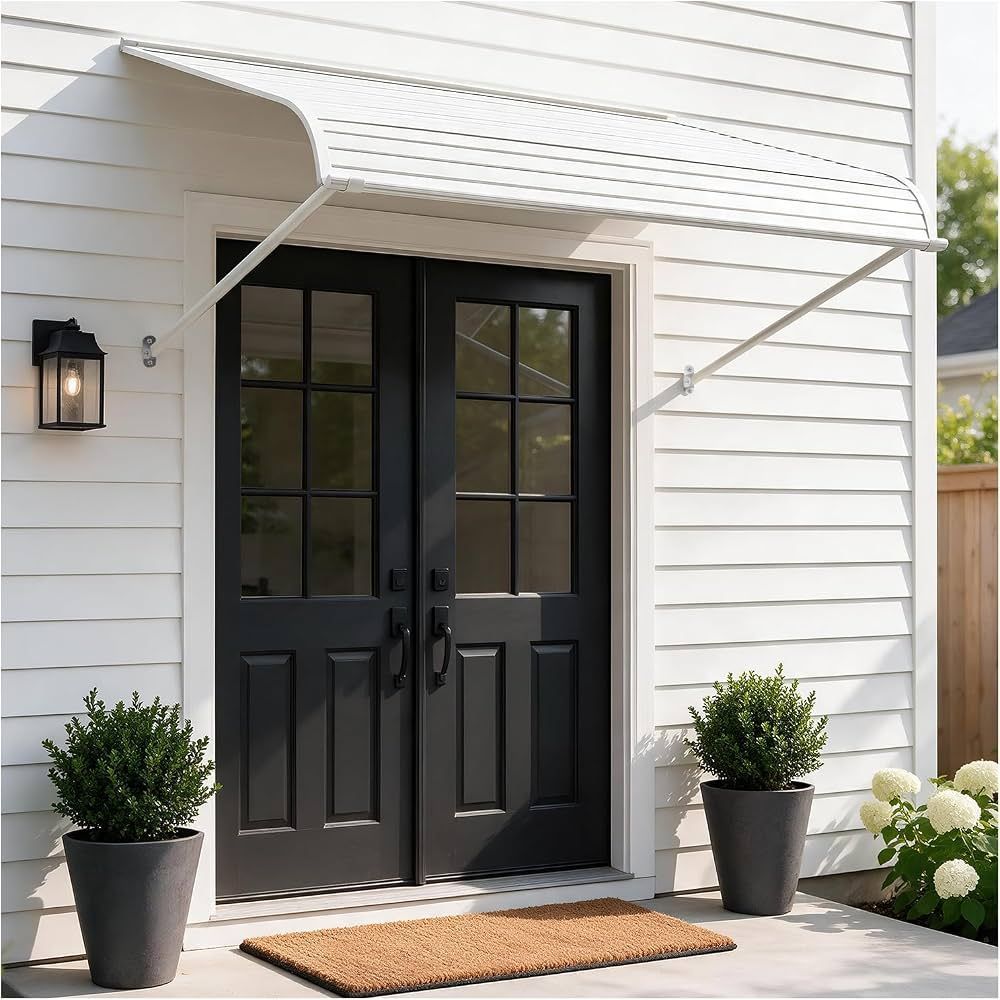
For a small covered area, yes. Downspouts with less than 7 square inches of opening are kept for small drainage areas such as porches and canopies, which includes a 2x3 at 6 square inches. A 3-inch round, at about 7, clears that line narrowly. A larger roof is a different job.
Does a strainer at the outlet help a small downspout keep up?
A strainer keeps sticks out of the elbow, but it sits across the opening the water has to pass, so it gives up some of the area the pipe depends on, and leaves packed against it can close it within one storm. On a 2x3, with the least area to spare, the larger pipe does more than a strainer.
Does a long sideways run change how much a downspout carries?
It can. A horizontal offset longer than 10 feet can reduce capacity. That is part of why a long jog across a wall is planned together with the pipe size, or avoided by moving the outlet.
How do I tell which size is on my house?
Stand at the bottom elbow with a tape and measure the pipe across its widest and narrowest points on the outside. Bring those dimensions to the estimate. Nominal names can mislead, since some pipes sold as 3x4 measure about 2.75 by 3.75 inches on the outside.
Note which outlet spills first when you request an estimate — the crew sizes the opening, the outlet and the pipe together so that end keeps up in a downpour. Joe's Gutters & Patios serves Gretna and the Greater New Orleans area. Call (504) 813-4293.
Get Free Estimate Call 504-813-4293Recent Posts