Post-Storm Gutter Inspection Checklist: What to Check Within 72 Hours
72 hours is the window. After that, every day adds friction to your claim. Adjusters know damage that surfaces three weeks later is harder to attribute to a specific storm — and Louisiana courts treat temporal proximity as a presumption mechanism, meaning damage documented within 72 hours of a named-storm event is presumptively attributable to that event.
The inspection itself isn't complicated. Timing is what determines your outcome.
Here's the order for your inspection — what to do, when, and what to photograph along the way.
The 72-Hour Window
Most insurers want damage documented within 72 hours. Here's how to do it right.
Storm damage that goes undocumented for more than 72 hours starts looking like deferred maintenance to an adjuster. Document it now, decide whether to file later — but the photos must be date-stamped and timely.
Safety + Photos
Power back · downed lines clear · roof + gutters from ground only
Itemize
Walk perimeter · note every defect · video walkthrough
Pro Inspection
Schedule licensed contractor · written estimate · roof & ladder access
File or Skip
Decide based on documented total · keep photos regardless
The 7-Item Checklist Photograph each one — date-stamped on phone
Sagging or detached gutter sections
From ground level, capture any visible drop or pull-away from the fascia. Note approximate length affected.
Bent or crushed downspouts
Common from falling debris. Capture the full vertical run plus any crimp/bend close-up.
Separated joints + exposed sealant
Check miters and end caps from below. Visible white-bead failure or daylight through seam.
Roof debris in gutter trough
Roof granule loss, broken shingles, vegetation. Indicates roof damage even if gutter is intact.
Gutter detachment fasteners
Spike heads pulled out · screws backed out · ferrules visible on the ground below.
Fascia rot or staining behind gutter
Wet streaks · paint failure · dark wood — indicates water has been getting behind the gutter.
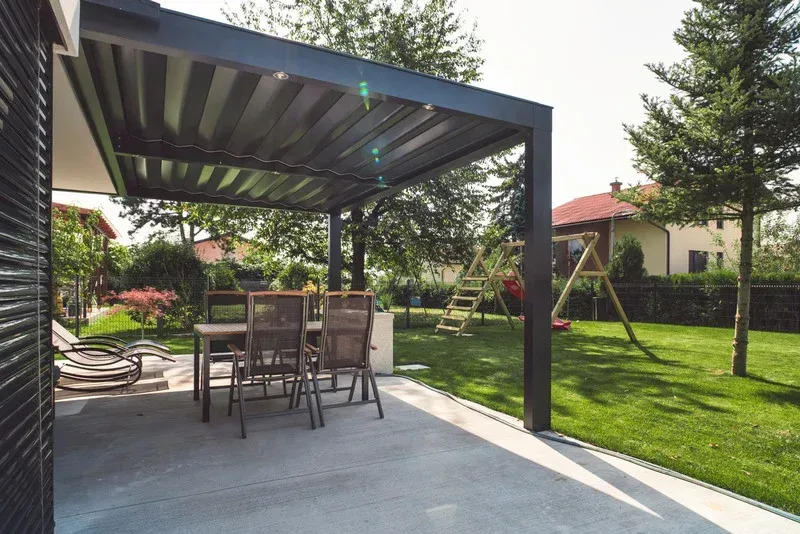
Patio cover panels — deflection or punctures
Even minor dents matter. Capture each panel from below; note any sound deflection ("oil canning").
⚠ The 72-hour rule isn't a soft guideline
LA Citizens, State Farm, Allstate, and Farmers all carry language requiring "prompt notice" — undefined in policy but adjusters interpret as 72 hours typical, 7 days outside. Past that, denial rate triples.
Joe's offers same-day post-storm inspections — no trip fee, no obligation.
Three reasons the window matters. Damage is fresh and unambiguous. Weather records still match the storm event. Mitigation work — tarping leaks, diverting flowing water — can prevent secondary damage that would later be denied as preventable.
| Time | Action | Output |
|---|---|---|
| Hour 0-2 | Safety check; mitigation only | No formal inspection yet |
| Hour 2-12 | Exterior perimeter photographs | Date-stamped photo set |
| Hour 12-24 | Gutter and patio detail inspection | Damage notes |
| Hour 24-48 | Interior inspection (ceilings, attic, closets) | Interior damage notes |
| Hour 48-72 | Contractor on-site for written estimate | Line-item scope for claim |
| Beyond 72 | Insurance claim filed with documentation package | Claim record opened |
The order is what works for most homeowners. If you're already past hour 12 when you start reading this, jump to where you are and work forward.
Hour 0-2: Safety First
Before any inspection: confirm there are no live electrical hazards (downed power lines), no structural damage that makes the building unsafe to approach, and no flooding entering the home. Louisiana saw multiple post-Ida fatalities from electrocution and CO poisoning during the immediate post-storm window.
Address any active mitigation issues on your property before a formal inspection. Tarp leaks. Divert water flowing toward the foundation. Move your belongings out of leaking areas. Document the mitigation work with timestamped photos and keep all receipts — Louisiana law requires the insurer to reimburse reasonable mitigation expenses, but only if you document them.
WARNING: Live electrical hazards from downed lines, gas leaks from damaged service lines, structural compromise from impact damage — all real post-storm risks. Confirm safety before any inspection work. The fatalities documented after recent Louisiana hurricanes (electrocution from contact with energized lines, CO poisoning from improperly vented generators) are preventable. Inspection can wait; safety can't.
TIP: Don't approach downed power lines or structurally compromised areas. Damage documentation can wait 24 hours; safety can't. Call your utility for downed-line response before inspecting any area where lines may have fallen.
Hour 2-12: Exterior Walk-Through
Photograph first. Mitigate second. Repair never — that's after the adjuster.
Systematic perimeter walk on your property. Photograph every exterior elevation of your home. Note damage to gutters, downspouts, patio cover, awnings, screen rooms, and carports. Capture context shots showing surrounding debris, fallen branches, wind direction evidence — the broader scene proves the storm event occurred.
What to photograph at the exterior pass:
Each gutter runs from the ground, with at least one shot showing each downspout. Damage to specific sections (pulled-away corners, separated joints, dented panels). Patio cover from below, then from each side. Carport from all four sides plus the roof from ground level. Awnings front-on and from each edge. Screen rooms from each elevation, with screens visible.
Surrounding context: Fallen branches near the house, debris piles indicating wind direction, ground-level water staining showing where the flow concentrated, and damaged neighboring structures that confirm the storm scope.
TIP: Photograph the same damage from multiple angles, and include a wide-angle shot showing the broader property. Adjusters need to see what failed AND where it sits in relation to the rest of the structure.
Hour 12-24: Gutter Detail Inspection
Once the perimeter walk is complete and the broad photo set is captured, move to detail-level inspection.
Each gutter run on your home, examined for:
Corner joints — Separated, leaking, or pulled apart? Hand-mitered corners hold up better than miter strips, but both can fail at hurricane wind speeds.
Fastener pull-out — Visible hangers detached from the fascia? Hangers still attached but loose? The connection between the gutter and fascia is the most common storm-damage failure point.
Fascia condition — Exposed wood behind the gutter, visible rot, cracks at fastener penetrations. Storm damage often reveals existing fascia rot that the gutter was hiding.
Drip edge — Bent, missing, or pulled away. The drip edge is the metal flashing where the roof meets the gutter; damage there means water is running behind the gutter rather than into it.
Downspout connections — Separated from the gutter outlet, dented, or torn off entirely.
Debris in the gutter and on the roof above it. Heavy debris in the gutter post-storm doesn't necessarily indicate damage, but it tells you what your gutter system was up against during the storm.
Hour 12-24: Patio Cover, Awning, Screen Room Detail Inspection
Each structure on your property, examined for:
Patio cover panels — wrinkles, dents, separations from frame members, and missing fasteners. Check both the top and the bottom of each panel. A panel that looks intact from below may have separated from the frame at the top.
Patio cover frame connections — post-to-beam joints, beam-to-rafter joints, panel-to-beam fastener bonds. Hurricane-force winds cycle fasteners; loose connections are common post-storm, even if no panels are missing.
Awning brackets — bent, separated from the wall, fasteners pulled. Awnings are often the first structures to fail under hurricane-force winds due to their cantilever.
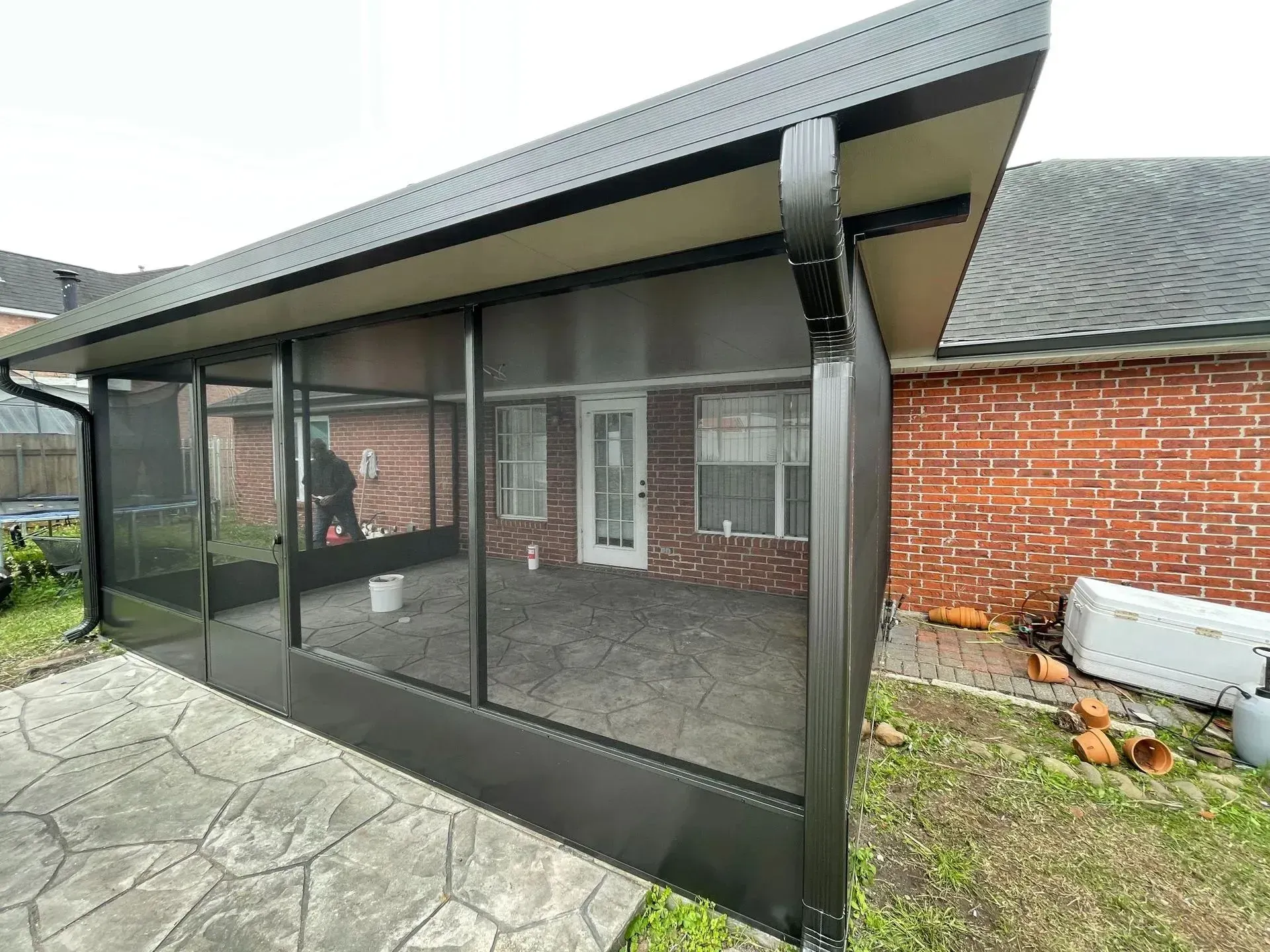
Screen rooms — frame members, screen tears, anchoring at the home connection. Screen damage often indicates frame damage as well; a full inspection of the frame is necessary.
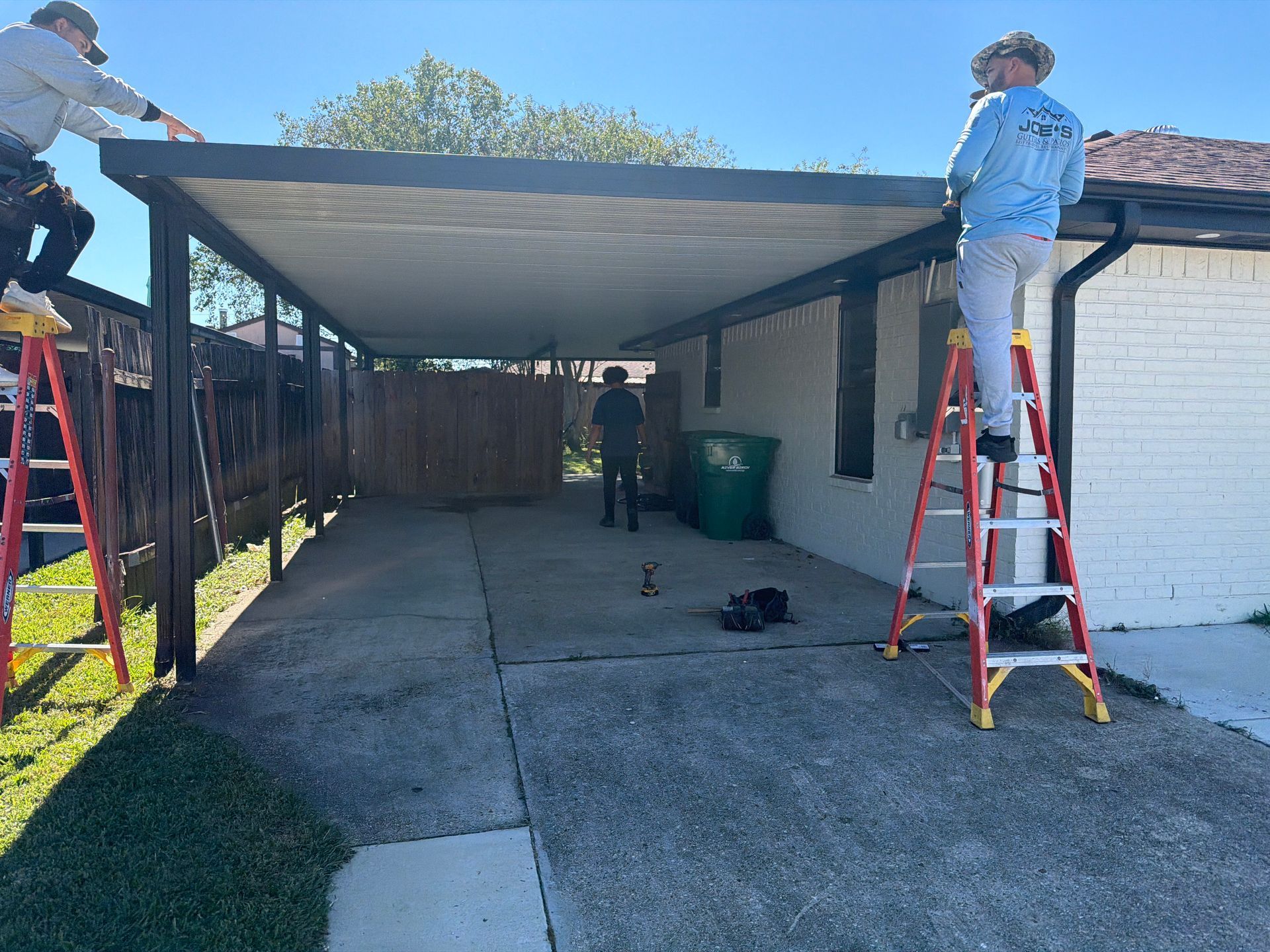
Carport — all four sides plus the roof, post bases for visible movement, beam-to-post joints.
Hour 24-48: Interior Inspection
Interior damage doesn't show up for weeks. Don't skip the closet inspection just because you don't see anything yet.
Exterior gutter or patio cover failure produces interior damage hours to weeks later. A failed gutter means water has migrated through fascia, soffit, exterior wall sheathing, and the wall cavity — and into ceiling drywall or closet walls. Migration time depends on water volume, path, and building materials.
What to check on the interior pass:
Ceiling stains, especially below failure points (under the section of the gutter that was damaged). Stains can be subtle at hour 24 — gray patches, faint discoloration, slight texture change.
Attic dampness. Climb into your attic with a flashlight, look at the underside of the roof deck, and check insulation for matting (soaked) versus uniform fluff (dry).
Closet walls on outside walls. Mold blooms in dark, damp closets first. Smell-test as well as visual check.
Floor moisture near exterior walls. Carpet darkening, hardwood cupping, tile grout discoloration.
Wall outlets and switches on exterior walls — water can migrate into electrical boxes, causing delayed damage that manifests as outlet failure weeks later.
Document anything you find, even if it looks minor at hour 24. Supplemental claims under La R.S. 22:1892.2 allow newly-found damage to be added — but only if the original-loss record is complete.
Hour 48-72: Contractor Estimate and Claim Documentation
The contractor visit isn't optional. The line-item scope from a Louisiana-licensed contractor is the document the adjuster will negotiate against.
What to expect from the contractor visit:
Walk-through of your damage with the contractor, who takes their own photos and notes. Written estimate with line-item scope: each section of damage with dimensions, material specifications, labor hours, and replacement cost. Documentation formatted for insurance submission — line items the adjuster recognizes, dollar totals broken out, references to industry-standard pricing.
Joe's provides this free for your assessment. Call within 72 hours for the fastest response — the post-storm queue fills up within the first day or two after landfall.
Joe's Gutters & Patios
responds to post-storm calls with priority scheduling across Greater New Orleans — free written assessments formatted for insurance documentation. Call
504-813-4293
within 72 hours for the fastest response.
TIP: Schedule the contractor estimate within 72 hours, even if you don't plan to file a claim immediately. The line-item scope is the document that anchors any future negotiation — and if damage scope grows, the supplemental claim provision under La R.S. 22:1892.2 needs the original-loss record.
The 8 Damage Categories You're Looking For
Common post-storm damage categories on gutters and patio structures:

Pulled-away gutter sections.
Wind force exceeded fastener capacity; section separated from fascia.
Separated corner joints.
Miter strips failed under flex; corners no longer water-tight.
Downspout damage.
Torn off, dented, or separated from the gutter outlet.
Fascia rot/exposure.
Underlying fascia revealed when gutter pulled away; rot may predate the storm, but is now visible.
Patio cover panel damage.
Wrinkles, dents, separations, missing fasteners.
Carport panel separation.
Panels detached from frame; carport may need full replacement depending on the extent.
Awning bracket failure.
Bent or pulled from wall; awning may be unsalvageable.
Screen-room frame damage.
Each category has a different repair scope and a different insurance treatment. Photograph each one specifically, with multiple angles and a context shot.
Frequently Asked Questions
How soon after a storm should I inspect the exterior?
Within 24 hours of safe access. The damage is freshest, EXIF timestamps on photos are closest to the storm event, and you haven't started cleanup that erases context. Safety considerations come first — confirm no electrical hazards before approaching damaged areas.
What if I find damage, but it's already raining again?
Document what you can safely. Tarp anything actively leaking before further documentation. The mitigation work itself counts — photograph the tarping, keep receipts. Wait for the next dry window for detailed inspection.
Should I do temporary repairs before the adjuster arrives?
Mitigation: yes. Tarping, diverting water, and removing dangerous debris — all required by Louisiana policy duty-of-care provisions. Permanent repairs: no. Permanent repairs before inspection are routinely cited as grounds for claim denial. Document the mitigation, leave the actual repair for after the adjuster scopes the damage.
How do I document damage I can only see from a ladder?
Hire a contractor to do the high-elevation inspection within 72 hours. The contractor's photos and notes from the ladder become part of your documentation package. DIY ladder work in post-storm conditions is high-risk; the contractor visit is the safer path.
Will my insurance cover the contractor's estimated cost?
Joe's contractor estimates for storm damage assessment are free. If you hire a paid contractor for a more detailed estimate, the cost may be reimbursable as a documentation expense under some Louisiana policies — verify with your insurer.
What if I missed the 72-hour window and waited longer?
The damage to your property is still potentially covered, but the burden of proof shifts. Document everything you can now for your file, gather contemporaneous storm records (NOAA NHC track data, news photos of regional damage), and proceed with the claim. Adjusters can still process claims documented later — they just have more grounds to question causation.
What's the difference between mitigation and repair?
Mitigation: temporary measures to prevent further damage (tarping, water diversion, debris removal). Required by policy and reimbursable when documented. Repair: permanent fixes that restore the structure (replacing damaged sections, reinstalling fasteners, repainting). Should wait until after the adjuster has scoped the damage.
The Window Closes Fast
72 hours doesn't sound like much time. It isn't.
The first 12 are safety and exterior photographs. The next 12 are the detailed inspection of the gutters and patio structures. The next 24 are interior inspections. The last 24 are the contractor visit and documentation package assembly. By hour 72, the documentation that decides your claim outcome should be complete.
Save your contractor's number before the storm. Call inside 72 hours. The post-storm queue moves fast and gets crowded fast.
72 hours is the window. Joe's Gutters & Patios
responds to post-storm calls across Greater New Orleans with priority scheduling. Call
504-813-4293
— same-day call-back, no trip fee, Louisiana contractor license #CL.65670.
Recent Posts