Metal Carport Condensation Dripping: Why It Rains on Your Car

You walk out in the morning and the hood is covered in drops, yet it never rained. The first move is simple: pull the vehicle out from under the roof, or park it at the open edge, before the next still, humid night. The cause and the permanent fix both follow from why a thin metal roof sheds water when the sky is dry.
What Happens Under a Thin Metal Roof at Night
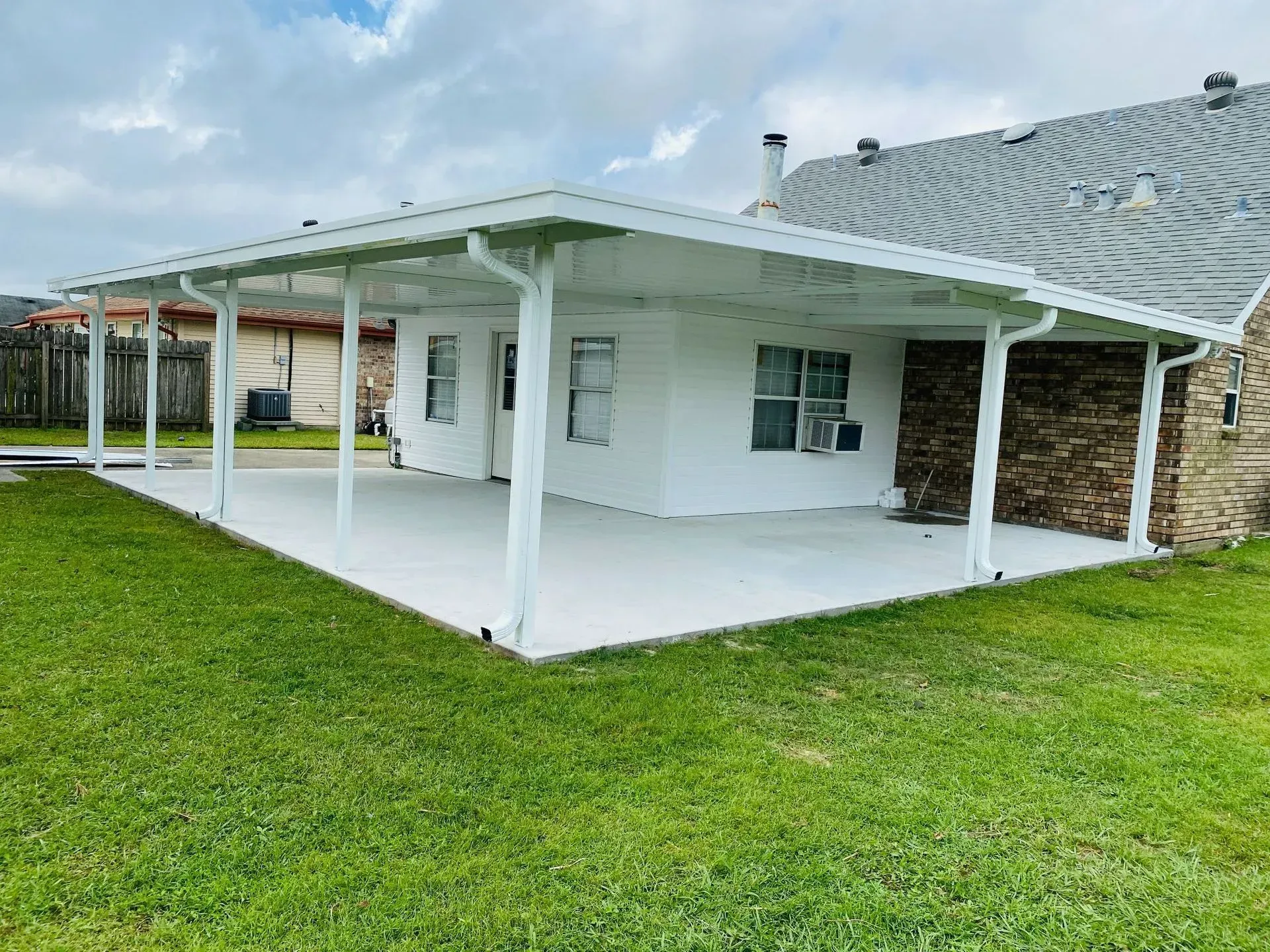
Air always carries some water vapor. The dew point is the temperature at which that air can hold no more, and any surface colder than that temperature collects liquid water. A carport panel is a thin sheet of aluminum with open air beneath it and no deck, no attic and no ceiling between the sheet and the vehicle. After sunset it sheds heat to the sky from its top face, and because the sheet holds so little heat, its temperature falls fast and can end up below that of the surrounding air.
When the panel temperature passes the dew point of the humid air around it, vapor condenses on the cold underside. Aluminum does not soak up water the way a wood deck does, so the film has nowhere to go. Fine beads grow, merge and run along the slope of the flat pan toward the lowest edge of each rib and lap seam. Once a bead is heavy enough, it lets go and lands on the car. On a heavy night it can sound like light rain under the roof.
First Steps to Protect the Vehicle
These steps all happen at ground level, and none of them involves touching the roof.
- Move the vehicle out of the drip zone. Park it beyond the roof edge until the panels are dry in the morning.
- Wipe the drops off the paint and glass. Use a clean, soft towel while the drops are still wet.
- Look up from the ground in daylight. Check whether the panel underside is dry or still beaded with water, and note whether the beads are evenly spread across the sheet.
- Keep a short log for a week. Write down whether the night was clear or overcast, calm or windy, and whether the roof dripped. The pattern shows which conditions trigger it.
- Take a photo from the driveway of the wet underside. Having it on file lets the crew see the layout and panel type before the estimate.
Why Some Nights Drip and Others Stay Dry
The sky takes heat from a roof best when nothing blocks the way. A clear, calm night lets the panel give up heat to the sky, while the air near it stays warmer and keeps its moisture. Cloud cover returns heat to the roof, and moving air carries warmth to the metal, so the panel stays closer to the air temperature and may never reach the dew point.
The picture also has two sides. A humid night with a clear sky is the worst combination, because the air is already close to its dew point and the panel only has to cool a small amount to cross it. A dry-air night with a clear sky can chill the same panel just as far and leave it dry, because the dew point sits far below the panel temperature. That is why the same carport can drip several nights running and then stay dry for days.
Humidity sets how far the panel has to cool before it beads. Air at 80 degrees and 90 percent relative humidity has a dew point of about 77 degrees, so a panel only 3 degrees cooler than the air starts to bead. The same 80-degree air at 50 percent humidity has a dew point near 60 degrees, and the panel would have to fall about 20 degrees below the air before any water formed.
After sunrise the sun warms the thin aluminum quickly. Once the panel climbs above the dew point, the beads evaporate and the underside dries.
How Insulated Panels Change the Drip
An insulated panel is a foam-core sandwich: a metal skin on top, a layer of foam, and a second skin facing down. The foam slows the flow of heat between the two skins. The top face still loses heat to the night sky, but the face turned toward your vehicle stays closer to the air temperature underneath, so it sits above the dew point on more nights and no film forms.
Flat pan is the standard choice for a carport and keeps rain off the car well. A panel with foam in it is worth considering where heat or moisture under the roof matters, such as boat or RV storage. The same foam also slows the heat that a sun-baked roof radiates down in summer, so one panel serves both purposes.
The table below shows how the two panel types behave on a clear, humid night.
| Panel type | Underside temperature | Condensation tendency |
|---|---|---|
| Flat pan (single skin) | Follows the top face closely | Can fall below the dew point and bead |
| Insulated (foam core) | Held nearer to the air beneath | Stays above the dew point on more nights |
What Insulation Does Not Change
Insulation narrows the gap between the underside and the air, but the arithmetic stays. The wetter the air, the less temperature difference the panel can tolerate before it beads. On a clear night when the air is already close to saturation, an insulated underside sitting only slightly below the air temperature can still reach the dew point, so the goal is fewer drip nights, not a guarantee of none.
Moisture that originates under the roof counts too. A boat hull that was just rinsed, a washed vehicle parked straight away, or a damp cover thrown over a trailer adds vapor to the covered air, and that raises the dew point right where the panel is coolest.
What lies under the roof plays a part too. Bare soil or grass beneath a carport releases moisture through the night, while a dry concrete slab releases little, so the same panel can bead more heavily over a dirt or lawn pad than over concrete. Open sides help in the same way. A carport walled in on several sides can hold still, damp air against the underside, while open sides let even a light breeze carry warmth to the metal and move moist air out.
Tip: Park a freshly washed or rained-on vehicle at the open edge until the paint and any cover look dry before pulling it under the roof. The vapor then clears into the outside air, and the dew point at the underside stays lower.
When to Call a Pro
Changing the panel is not a homeowner task. Any step that puts a person on or under the roof sheet, such as swapping a flat pan sheet for an insulated one, resealing laps or adding anything to the underside, is ladder work at the roof edge that belongs to the crew. Sheets are also fastened to the frame for wind loads, so removing panels is a structural job.
Warning: Do not climb onto the carport or lean a ladder against the panels to add foam or sealant yourself. Aluminum sheet flexes under weight and the edges are sharp. The installation crew handles panel swaps and underside work from proper staging.
A free on-site estimate settles the practical questions: what panel the carport has now, whether an insulated panel fits the existing frame, and how the sheet change is staged. Bring the week's log and the photo of the wet underside.
The Habit That Pays Off
A carport that drips on a clear night is doing what thin metal does in humid air. Moving the vehicle, keeping moisture out from under the roof and choosing the right panel solve the problem in that order, and each step protects the paint on the hood.
Frequently Asked Questions
Is it condensation or a roof leak?
A leak follows rain: water appears during or soon after a storm and tends to come through at a seam or a fastener line. Condensation appears on rainless nights as a fine film across the whole underside. If the underside is beaded after a night with no rain in the previous day, condensation is the cause.
Why does it drip in the same spots every time?
Water on the underside slides along the slope of the pan until it reaches the lowest point of a rib or the low edge of a lap seam. Beads collect there and grow into drops heavy enough to fall, so the spots repeat unless the vehicle moves.
Does an integrated gutter stop the drip?
An integrated gutter collects water at the roof edge and carries it to a downspout. A drop that lets go in the middle of a sheet falls straight down, so only the water that runs all the way to the low edge reaches the gutter; a gutter protects the edges of the parking space but not the middle.
Why does the dripping get worse in the cooler months?
Longer nights give the panel more hours to lose heat to the sky, so it has more time to fall past the dew point before sunrise. A humid spell in the cooler months can drip harder than a summer night carrying the same moisture.
Can I glue foam board to the underside myself?
That is work at the roof, which belongs to the crew, so the answer is no. Foam with open joints also lets humid air slip through the gaps and reach the cold metal behind it, so the drops simply form at the seams.
Can a weather forecast warn me about a drip night?
Watch the forecast dew point, not the humidity percentage. When the overnight low is forecast within a few degrees of the dew point and the sky is clear and calm, the panel can bead. When the gap is 25 degrees or more, the panel needs a large overnight drop before any water forms.
Request a free carport estimate — an insulated roof panel keeps the underside closer to the air temperature so less water beads over your vehicle. Joe's Gutters & Patios serves Gretna and the Greater New Orleans area. Call (504) 813-4293.
Get Free Estimate Call 504-813-4293Recent Posts