Carport Height for a Boat Trailer: Measure the Loaded Rig

The choice in front of you is a clearance height, and the number comes from the rig. Covers built for taller boats or lifted trailers run 12 to 14 feet tall, but that range only starts the conversation. Your boat, your trailer, your driveway and the lowest member of the structure settle the real figure, and each of them can be checked from the ground with a tape measure and a helper.
Measure the Rig as It Sits on the Trailer
Park the loaded rig on level ground with the tires at their normal pressure and the boat resting on its bunks or rollers exactly as it will be stored. A hull sitting on a trailer stands higher than the same hull on a ramp or a lift, because the keel rides above the frame and the frame rides above the axle. Measuring the boat alone, or reading a number off a spec sheet, leaves out the trailer and every inch of ride height under it.
The tallest point depends on the boat. On a runabout it can be the windshield frame. On a pontoon boat it can be the bimini top frame or a rail-mounted canopy. A center console may carry a T-top or a tower, and a bay boat can stack a radar mount on top of that. Walk around the rig, look at each candidate, and measure from the ground to the top of whichever one is highest.
Do this from the ground. A tape reaches the lower items, and a telescoping measuring rod with a helper watching the top end reaches the next range. If the top of the rig is beyond what you can measure while standing flat on the driveway, stop there. Climbing onto the trailer, the gunwale or a ladder to reach the top is not part of the job, and the crew can take the last measurement safely at the estimate.
Write down three numbers: height at the tallest point, width at the widest point, and length from the trailer coupler to the rearmost part of the boat or motor. Add a note on which configuration you measured, because the next section changes the answer.
Add Everything That Sticks Up
Antennas, radar domes, outriggers, tower rails, a bimini frame and a mounted winch light all add height that a hull measurement misses. Some of these fold, lower or unscrew, and some stay put. The decision is about habit: if you will fold the antenna every time, size for the folded rig. If there is any chance you will leave it standing for a quick return from the ramp, size for the raised rig.
Fold-down hardware has a weak point. A hinged tower or a bimini frame that gets stored down on every ordinary day will still get left up on the day you are tired or in a hurry. A carport sized only for the folded position leaves no room for that one day. Choose the stored position you would realistically use on the worst day, and measure that.
Then add margin. The rig does not park in exactly the same spot twice, and the driveway pitch, the tire pressure and the load in the boat shift the top line by small amounts. Leave a margin of clear space over the tallest point so a slightly different parking spot does not bring the top of the rig into the beam.
Tip: Take one side photo of the loaded rig from across the driveway with a person of known height standing next to the trailer wheel. The crew can compare your numbers against the photo before the visit.
Check the Driveway Approach Before Trusting the Number
A rig measured on a flat pad is not the rig that arrives at the entry. A trailer rolling into a carport crosses the street apron, the driveway and the edge of the slab, and each change of grade tilts the whole assembly around its axle. When the front of the trailer climbs a rise, the tongue end lifts and the stern end drops. When it rolls down into a dip, the opposite happens. The tall point on the rig moves toward the entry beam or away from it by an amount that depends on the length of the trailer and the size of the grade change.
Two sides apply here. A level drive that meets the slab at the same height adds nothing, and the parked measurement is the passing measurement. A drive that crests at the street or drops toward the carport can add inches at the exact spot where the clearance is tightest, which is the entry threshold. Check by standing the rig, or a photo of it, where the entry beam will sit, and ask whether the grade there matches the grade at your measuring spot.
Approach angle matters for width as well. A rig that enters straight down the centerline can pass through a narrower opening than one that swings in from a diagonal or a curved drive. A boat trailer is long, and the back end sweeps wide on a turn, so a carport that looks wide enough on paper can leave you backing in with a few inches to spare on each side.
Find the Lowest Point the Rig Passes Under
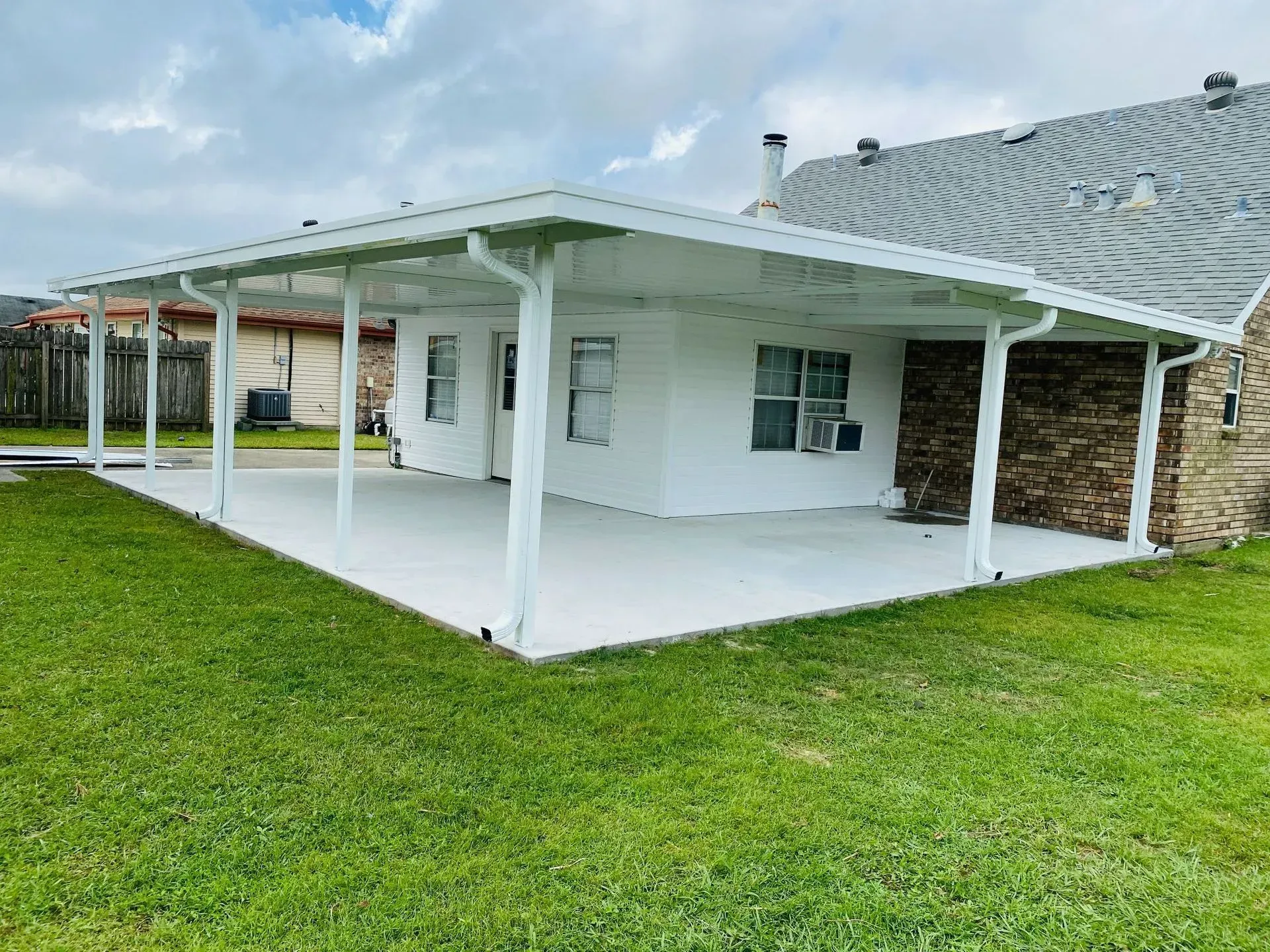
A quoted height of 12 or 14 feet can describe the top of the roof or the underside of the beam at the entry. The two are different numbers. Carport roofs are sloped to shed water, so one side stands higher than the other, and the beam that carries the panels sits lower than the highest point of the roof. What the rig has to clear is the underside of the lowest member over the opening: the beam, the fascia or any trim that hangs below it.
Ask which side of the roof is the low side and plan to enter at the high side. A rig entering under the low edge has less room than the stated height suggests, and a tall T-top is the first part to find that out. The crew can also set the roof slope and the entry end together so the high side faces the way you drive in.
Taller does not come free. Post size depends on the span, the wind loading and the height of the structure, so a higher opening calls for heavier posts and added bracing at the connections. That is a reason to pick the height from your measurements plus margin, and not from the tallest figure on offer.
Warning: Keep at least 10 feet between any part of the boat, mast or antenna and an overhead power line. If the parking spot sits near a service drop, ask the electric utility to look at the line before the carport is planned.
The permit side of a structure this tall depends on its size and where it stands on the lot, so check with your local building department before the layout is final.
Set the Width for the Turn, Not the Hull
Start with the widest point on the rig. On some trailers the fenders set it, on others the hull sides do, and a boat can overhang the frame. Measure from the outside of the widest part on one side to the outside of the widest part on the other, with a helper holding the tape level.
Then account for the posts. A width on a quote can be measured between post centers or across the roof, and each post has its own thickness, so the clear opening between posts is narrower than either figure. Ask for the clear distance between the inside faces of the posts at the entry, and compare that figure to your rig width.
The next factor is the swing. Backing a trailer in, the trailer's tail moves off the line of the tow vehicle, and each correction at the wheel adds to the swing. A tight opening that works when you are straight on becomes a scrape on the post when you are angled. Add width for the approach you actually drive, and size the opening for the worst backing day.
Length gets a quick check as well. Standard single-vehicle covers are built around a full-size vehicle, and a trailered boat can run longer once the tongue and the motor are counted. Compare your coupler-to-motor measurement with the depth you are quoted, and ask for a boat-sized cover if the two do not line up.
Let the Crew Measure Where Your Tape Stops
The estimate visit is where your numbers get checked against the site. Bring the three measurements, the stored configuration and the photo to it. The crew takes the exact length, width and height of the rig with the boat on it, and handles anything at a height you cannot reach from the ground, including the entry beam clearances.
The height decision stays with the rig, the approach and the lowest member, and the rest of the design follows from it.
A carport that clears the boat on the first day keeps clearing it on the hundredth, so the effort is worth spending at the start. Measure the loaded rig, count what sticks up, test the approach and ask where the lowest edge hangs, and the opening takes care of itself.
Frequently Asked Questions
Does a boat cover or tarp add to the height I measure?
Yes, when the cover rides on support poles or a ridge frame. Those poles hold the fabric up off the windshield and the canopy, and the pole tips can sit higher than any part of the boat. Measure the rig with the full cover system fitted. A cover pulled snug over the hull adds close to nothing.
Should I size the carport for the boat I own now or the one I might buy?
Post length sets the opening height, since the beam is carried at the top of the posts. A taller opening later is a question about the posts and footings, not a small add-on. Think about the largest rig you could own in the next few years, and ask the crew what a later height change would involve before you fix the number.
Can I lower the stored height with the tongue jack?
The jack tilts the rig about its axle, so cranking the coupler end up or down shifts the tall point a little. Which end moves depends on where the highest part of the boat sits. Park the rig at the jack setting you will really use, then re-measure the top point. On soft ground, put a board under the jack foot.
Does the tow vehicle need to fit under the carport too?
Only if it drives in with the boat attached. In that case the truck cab, a roof rack or a light bar passes the entry, and the taller of the truck and the rig sets the clearance. If you unhook outside and roll the trailer in on its own, only the trailer and boat count, and a trailer dolly can handle that last stretch.
Will a gutter or downspout at the entry change the clear opening?
It can. An integrated gutter can hang below the edge of the roof panel, and where it does, its underside becomes the lowest edge on that side; a downspout runs down a post and takes a slice of the opening beside it. Ask the crew to place the outlet and downspout at a rear post, away from where the rig passes.
How much room do I need to walk around the boat?
Open the widest console door, storage hatch or fender-mounted locker, and measure the arc it sweeps. That arc, plus the width of a person, sets the walkway on that side. The side with the trailer winch post and bow roller needs a clear route to the bow eye, so keep the wider gap there.
Hand over your rig measurements and photos — the crew sizes the entry height and the clear width between posts to the loaded boat and trailer. Joe's Gutters & Patios serves Gretna and the Greater New Orleans area. Call (504) 813-4293.
Get Free Estimate Call 504-813-4293Recent Posts