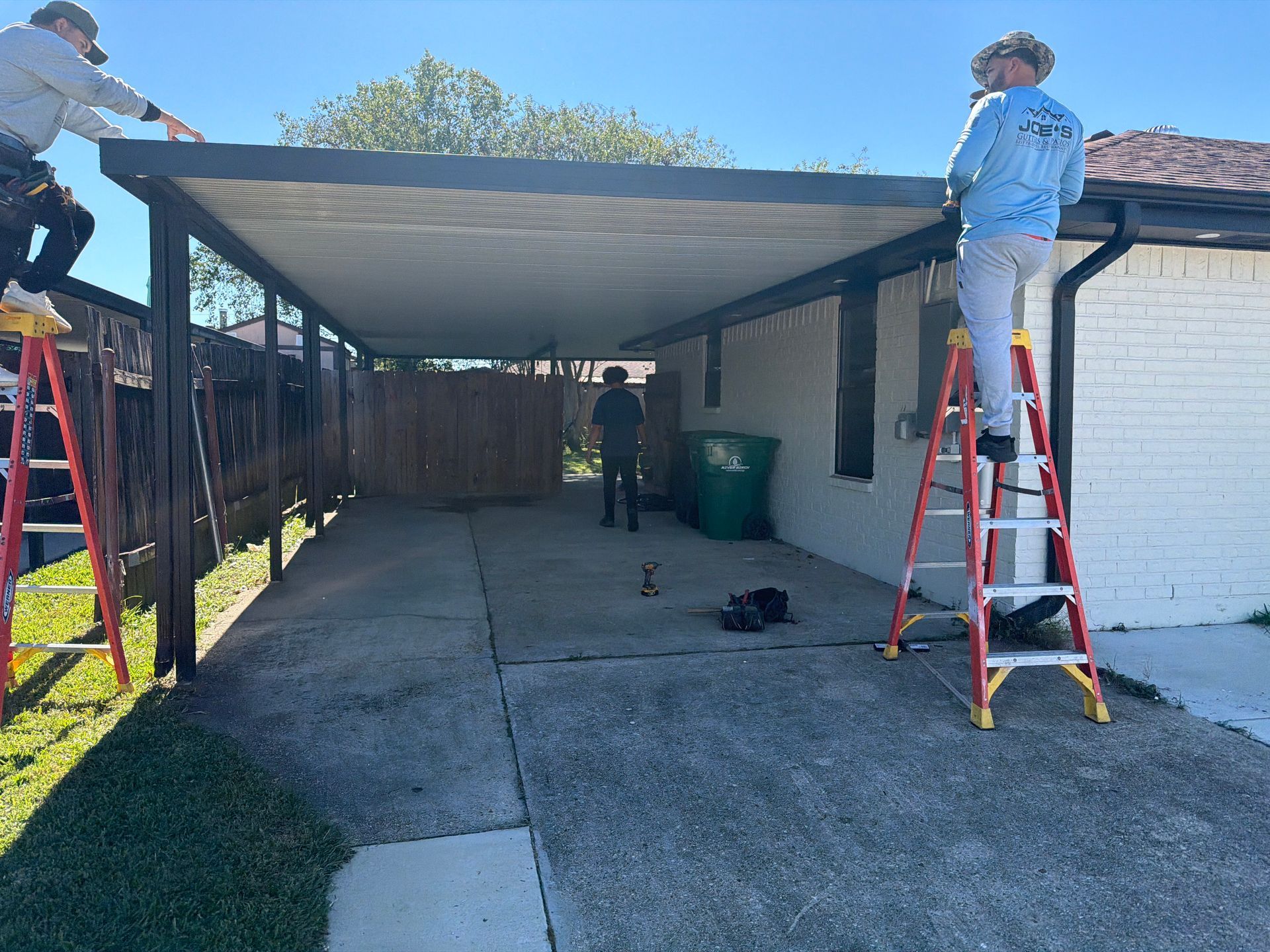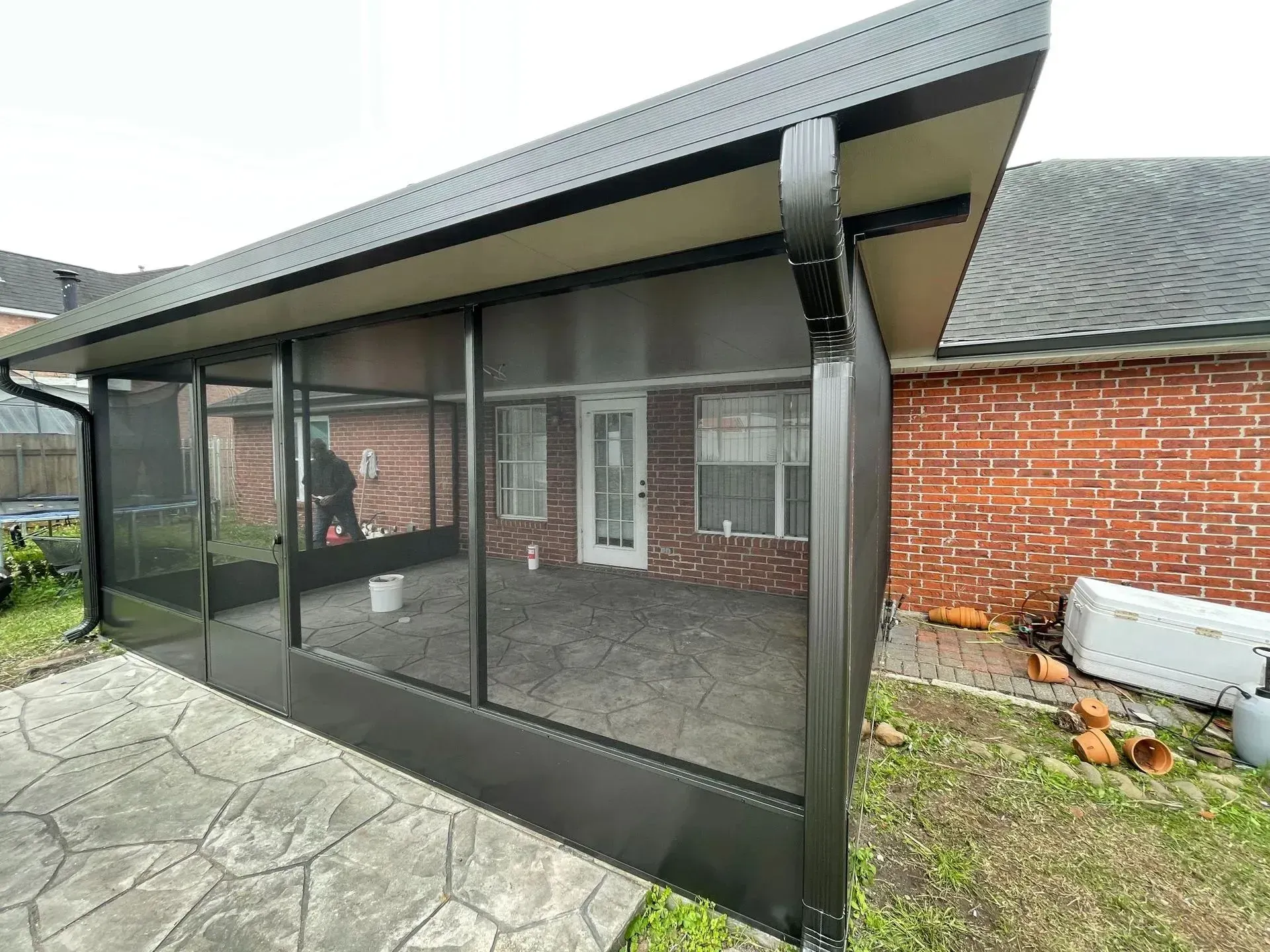
How to Spot a Bad Gutter Installation Before You Make Final Payment
The crew is packing up. The gutters are on the house. The contractor wants the check.
Before you sign, walk the perimeter and look at what was installed. You don't need to know the technical spec sheet — you just need to know what quality work looks like and what bad work looks like. The eyes are usually right.
Quality installations look intentional. The line is straight. Caulk is clean. Components match. Corners are tidy. Bad installations on your home look the opposite — wavy lines, sloppy caulk, mismatched parts, and exposed damage where the gutter was hung over rotted fascia.
Eight visual warning signs. Any one of them on your installation is the reason to pause the final check until the contractor explains what's going on.
Why Visual Inspection Matters Before Final Payment
Once the check clears, your leverage drops 90%.
A contractor with cash in hand has no urgency to fix problems. Before final payment is when the contract works for you. These are the eight red flags worth holding 25% retainage over — none of them are subjective.
The Eight Red Flags Each one is a documented deficiency, not a preference
1 · Visible gap behind gutter
You can see daylight or fascia between the gutter back lip and the wall. Will leak the first big rain.
Why it matters: failed flashing or wrong hanger2 · Sagging mid-span
Eyeball the longest run — should be a clean straight line. Visible droop = hanger spacing too wide or wrong fastener.
Why it matters: 24" max OC; 18" in heavy rain zones3 · No drip edge / apron visible
Look up under the roof edge. Should see metal extending into the gutter throat. Naked plywood = guaranteed fascia rot.
Why it matters: IRC R905.2.8.5 requires drip edge4 · Spike-and-ferrule fasteners
Visible large nail heads punched through the front face = old-style. Hidden hangers should be inside the trough.
Why it matters: spikes back out in 5–8 yrs5 · Lumpy or gapped sealant
Inside corners and end caps should have smooth, uniform bead. Visible voids, ridges, or skin = bad cure or wrong product.
Why it matters: leaks within 2 rainy seasons6 · Downspout dumps at foundation
No extension or only a splash block. In Louisiana clay, water will reach the slab.
Why it matters: 10 ft min in NOLA7 · Outlet smaller than 2"×3"
Look up into the trough. Round tab outlets and undersized rectangles back up under heavy rain.
Why it matters: 3"×4" recommended for LA rainfall8 · Job site not cleaned
Screws, scrap aluminum, sealant tubes in your grass. Indicates the same care level was applied to the install.
Why it matters: lawnmower → flying debrisYour 4-Step Leverage Path
- Document on the day. Photograph each defect with date stamp before the crew leaves.
- Create a written punchlist. Email it to the contractor same day, request acknowledgment by reply.
- Hold 25% retainage. Standard contract clause — final payment due upon completion of punchlist, not crew departure.
- Escalate if needed. File with LSLBC at lslbc.louisiana.gov within 90 days. Bond claim available for licensed contractors.
Joe's invites the homeowner walkthrough on every job.
There are seven technical specs to verify (corner method, hanger spacing, pitch, fastener spec, run continuity, sealant chemistry, downspout sizing). That's the rigorous verification on your install — useful when you have the contract spec memorized.
This article is simpler. It's the visual gut-check. Things on your install that don't look right usually aren't right, even if you don't know exactly which spec was missed. Pre-payment is when your contractor's motivation to fix is highest. After payment, fixes are scheduled when the contractor has time.
The 15 minutes you spend walking the installation with a critical eye is the cheapest insurance on the work.
| # | Warning Sign | Visible How | What It Means |
|---|---|---|---|
| 1 | Wavy or crooked gutter line | From across the yard | Inconsistent hanger heights, wrong pitch, or rushed installation |
| 2 | Visible gap between gutter and fascia | From below, looking up | Short fasteners, misaligned hangers, or hidden fascia damage |
| 3 | Sloppy or excess caulk at corners | At each corner, close inspection | Rushed installation hiding a poor metal joint |
| 4 | Mismatched components or color differences | At downspout connections, corners | Scrap-stock installation, supply shortcuts |
| 5 | Crew working too fast (rushed) | Behavioral, during installation | Skipping standard procedures (corners, sealant cure, fastener detail) |
| 6 | Exposed fascia damage behind new gutter | Pull gutter away slightly to inspect | Contractor installed over existing rot instead of repairing |
| 7 | Downspouts pointed at the foundation | From the ground | Drainage strategy skipped; foundation moisture problems coming |
| 8 | No drip edge or drip edge not integrated | Looking up at the eave from below | Roof runoff will track behind the gutter onto the fascia |
Each warning sign has a real-world consequence. Some are cosmetic. Most are structural. None of them gets easier to fix after the check clears.
Sign 1 — Wavy or Crooked Gutter Line
Stand across the yard from your house and look at your gutter run. The line should be straight from end to end, with the slight pitch you'd expect (about 1/4 inch drop per 10 feet — barely visible, but consistent).
If you see waves, dips, or sections that hang lower than the rest of the run, the installation has problems. The cause is usually one of three things: hanger heights aren't consistent (rushed installation), the gutter wasn't pitched correctly during installation, or the fascia behind the gutter has settled and the contractor didn't address it.
Quality installations look like a single straight line from across your yard. Bad installations look like a sketch where the artist's hand wandered.
Sign 2 — Visible Gap Between Gutter and Fascia
Look up at where your gutter meets the fascia. There should be no visible gap. The back wall of the gutter should sit flush against the fascia along the entire run.
A visible gap means the fasteners are too short, the hangers are misplaced, or — most worrying — the fascia behind the gutter has rotted, and the contractor didn't repair it. Water will track through that gap onto the fascia and into the soffit within months.
TIP: Push up on your gutter from below at several points along its length. A properly fastened gutter resists firmly. A gutter with too few fasteners or undersized fasteners flexes upward easily. The flex test catches misfastened gutters that look fine until rain hits them.
Sign 3 — Sloppy or Excess Caulk at Corners
Look at each corner of your installation. The sealant bead should be clean, evenly applied, and applied only to the visible seam. If you see caulk smeared on the gutter face, dripped down the front, or globbed into the corner cavity, the installation was rushed.
Excess caulk often hides a poor metal joint. A clean hand-mitered corner needs a thin polyether bead on the seam — that's it. When the corner shows a thick, uneven smear of caulk, the contractor compensated for sloppy metalwork by piling on sealant. The sealant fails before the metal joint would have, and the corner leaks.
Different sealant types tell different stories. White silicone caulk on the corner means cheap installation (silicone fails in Louisiana heat at year 2-4). Gray polyether sealant means premium installation. The color tells you the chemistry without asking.
Sign 4 — Mismatched Components or Color Differences
Walk the perimeter, looking at color consistency. Gutter sections, downspouts, end caps, and corners should all match in color and finish quality. If you see slight color shifts between sections, mismatched downspouts, or end caps that don't match the gutter color exactly, the contractor used scrap stock or sourced components from different supply runs.
The cosmetic problem is obvious. The structural concern is what else came from the scrap pile — older coil stock with degraded baked-enamel finish (rated under AAMA 2604/2605 for new product, but degraded once stored too long), mismatched fastener specs, or aluminum gauge variation.
Sign 5 — Crew Working Too Fast (Rushed installation)
This is the behavioral warning sign. A quality installation on a typical home (4-8 corners, 100-200 linear feet of gutter) takes most of a day for a two-person crew. Hand-mitered corners alone run 20-30 minutes each. Polyether sealant needs careful application time at corners.
If your crew arrives at 9 AM and is loading the truck by 11 AM with a full system installed, something got skipped. Common shortcuts: miter strips instead of hand-mitered (5-10 min per corner vs 20-30), sheet metal screws instead of neoprene-washer screws (no detailed work at each fastener), wider hanger spacing (fewer fasteners total).
Watch the crew. If they look unhurried at corners and connections, they're doing the work. If they're racing through, ask why.
Ask the foreman how long the installation will take when they arrive. Compare against actual time. A 5-hour installation that takes 2 hours is suspicious, not impressive. Quality work takes time, especially at the corners.
Sign 6 — Exposed Fascia Damage Behind New Gutter
This requires getting up to gutter level — a step ladder works. Pull the gutter back gently or look behind it from above. The fascia behind your new gutter should be sound, dry, and undamaged.
If you see dark staining, soft or rotted wood, exposed nail holes from previous gutter mounting, or visible fascia damage, the contractor installed the new gutter over existing problems. The contractor may have planned to "fix it later" or assumed you wouldn't look. Either way, the new gutter is anchored to compromised wood, and the rot will spread under the new installation within months.
WARNING: Installing new gutters over rotted fascia is a documented contractor shortcut that produces predictable damage within 6-18 months. The new fasteners pull through the soft wood, the gutter sags, and the rot accelerates from continued moisture against the unsealed substrate. If you see fascia damage behind a new gutter, the installation needs to come down, the fascia needs replacement, and the gutter needs to be reinstalled. This is not a cosmetic issue.
Sign 7 — Downspouts Pointed at the Foundation
Walk to each downspout. Where does it discharge? In a properly installed system in Greater New Orleans, downspouts discharge at least 10 feet from the foundation, into a storm drain connection, or into a French drain. What you should NOT see: a downspout dumping water within 3 feet of the foundation, with a splash block at the concrete edge.
The high water table in much of Greater New Orleans means foundation-discharged water doesn't dissipate — it pools and migrates back to the foundation, causing pier-and-beam crawlspace flooding or slab edge settlement. The contractor who skipped drainage routing is creating a problem that your foundation will find in years 3-5.
This is the easiest warning sign to spot on your installation and one of the most expensive to ignore.
Joe's Gutters & Patios
installs to a published spec — every installation is walk-through verified before final payment. Hand-mitered corners, 30-inch hanger spacing, polyether sealant, ASCE 7 wind engineering. Free written estimate. Call
504-813-4293.
Sign 8 — No Drip Edge or Drip Edge Not Integrated
Look up at the eave from below or from a step ladder. Where the roof shingles meet the gutter, you should see a metal flashing strip — the drip edge — that extends down behind the back wall of the gutter. The drip edge directs roof runoff into the gutter, not behind it.
A missing drip edge or one that doesn't integrate with the gutter back wall means water from heavy rain runs behind your gutter onto the fascia and into the soffit. The gutter looks fine from your driveway; the fascia rots invisibly within 6-12 months.
This is the installation mistake most homeowners can't easily spot from the ground. From a step ladder, it's obvious — you can see whether the drip edge extends down behind the gutter or just stops at the roof edge.
TIP: Use your phone camera as a periscope when ladder access is limited. Hold the phone above your head, point it down at the eave, and capture the drip edge detail. The camera sees what your eyes can't see from below — and the photo gives you something to show a second contractor if you need an opinion on the installation.
What to Do When You Spot a Warning Sign
The walk takes 15 minutes. You'll find one or more warning signs on most marginal installations. The question is what to do about them.
Don't sign the final check yet. This is your strongest negotiating moment.
Photograph everything. Date-stamped phone photos of each visible problem. EXIF metadata proves when you took them.
Ask the contractor to walk through each warning sign with you. Listen for two kinds of responses. The good response: "I see what you're saying — let me come back tomorrow and fix that section." The bad response: "That's industry standard," "You're being too picky," or "It looks like that on every house." Industry-standard installations don't have wavy lines, sloppy caulk, or downspouts at the foundation.
Distinguish "I'll come back" from dismissal. A contractor who acknowledges the issue and schedules a fix is responsive. A contractor who minimizes or argues is establishing the position they'll hold post-payment. Note which response you got — it tells you what year-2 will look like.
Get a second opinion if needed. A different contractor can walk through your installation in 30 minutes and confirm whether your concerns are valid. The cost of a second opinion (often free as part of an estimate visit) is small compared to the cost of paying for a bad installation.
Withhold final payment until visible problems are fixed.
Your contract should give you the right to withhold final payment for documented installation issues. If the contractor refuses to come back, the unpaid balance is your strongest position in any subsequent dispute.
Frequently Asked Questions
Should you pay anything before warning signs are fixed?
Most installation contracts call for a deposit at signing, possibly a milestone payment after permit pull or material delivery, and final payment on completion. The deposit and milestone payments aren't negotiable on warning sign issues — those were earned. The final payment is what the warning sign discussion is about.
What if the contractor says "That's industry standard"?
Industry-standard quality installations have straight gutter lines, clean caulk, sound fascia behind the gutter, and downspouts that discharge away from the foundation. "Industry standard" is the contractor's attempt to redefine quality downward. A second contractor's opinion resolves the dispute fast.
Can you withhold full payment for visible warning signs alone?
Probably yes, depending on your contract terms. Most installation contracts give the homeowner the right to withhold payment for documented installation issues. The warning signs in this article are documented installation issues. Photographs of each issue establish the documentation.
What's the difference between cosmetic and structural warning signs?
Cosmetic warning signs (color mismatches, sloppy caulk on the visible face): unsightly, but the gutter system may still function. Structural warning signs (wavy line, gap behind gutter, fascia damage, no drip edge): the system will fail prematurely. Both are reasons to pause final payment, but structural issues are decisive.
How long should the contractor take to fix visible problems?
Reasonable contractors come back within 1-2 weeks to address documented issues. The fix itself often takes 2-4 hours for one section. If the contractor pushes the fix beyond 2 weeks, that's information about how year-2 warranty calls will be handled.
Can you get the deposit back if you refuse to sign off?
Generally, no deposits are typically non-refundable once material has been ordered and labor delivered. Your strongest position at the warning sign stage is the unpaid final payment, not the deposit. Don't sign the final check until visible problems are addressed.
Trust Your Eyes Before You Sign
Quality work looks quality. Bad work looks bad. Your eyes are usually right.
Eight warning signs to check. Fifteen minutes to walk. Final payment is held until each issue has either been fixed or has a satisfactory explanation in writing.
Most contractors do good work. Some don't. The walk before the final check is how you tell which one was on your house this week.
Trust your eyes before final payment. Joe's Gutters & Patios
installs the spec that looks right because it was done right. Call
504-813-4293
— same-day call-back, no trip fee, Louisiana contractor license #CL.65670.
Recent Posts