Copper Gutters vs. Aluminum Gutters: Is the Upgrade Worth It?
Choosing a gutter system might not be the most exciting home improvement decision, but it’s one of the most important when it comes to long-term protection and value. Two of the most common options are copper gutters and aluminum gutters — and while both are widely used, they offer very different benefits and cost profiles.
Copper gutters are often seen as a premium, long-lasting choice with a beautiful finish, while aluminum gutters are the most popular option in residential installations. The question many homeowners ask is:
Is the copper upgrade worth the extra cost?
In this comprehensive guide — tailored to homeowners who care about value, performance, durability, and aesthetics — we’ll break down everything you need to know about copper and aluminum gutters, including material differences, real-world performance, cost considerations, long-term value, and the situations where each makes sense.
Why Choosing the Right Gutter Material Matters
Your gutters are one of the first lines of defense against water damage. They collect rainwater from the roof and channel it safely away from your foundation, siding, landscaping, and exterior finishes. Because gutter systems are exposed to the elements year-round, the material you choose affects:
- Durability and lifespan
- Maintenance needs
- Resistance to corrosion and weathering
- Installation and long-term cost
- Aesthetic appeal and architectural style
Choosing cheap gutters that fail early can lead to costly repairs later. On the other hand, a premium material like copper can last for decades and even become a selling point for your home.
Copper Gutters: A Legacy of Durability and Style
What Makes Copper Different?
Copper is a naturally corrosion-resistant metal. When installed as gutters, it doesn’t require additional paint or coatings because it resists rust by nature. Over time, copper develops a distinctive patina — a bluish-green finish that many homeowners find highly attractive.
Advantages of Copper Gutters
Exceptional Longevity
Copper gutters can last 50–100 years or more when installed correctly and maintained properly. This far exceeds the lifespan of most other gutter materials.
Rust-Proof and Corrosion-Resistant
Unlike steel or iron, copper never rusts. This makes copper ideal for coastal climates or homes near saltwater, where corrosion is a common concern.
Timeless Aesthetic Appeal
Copper gutters add a historic or upscale look to homes. Many architectural styles — from Craftsman to Mediterranean — benefit from the visual richness of copper.
Lower Maintenance (Aesthetic Focus)
Because copper naturally resists corrosion, it often requires less ongoing maintenance to preserve its surface compared to painted metals.
Aluminum Gutters: The Most Popular Residential Choice
Why Aluminum Is So Widely Used
Aluminum is lightweight, corrosion-resistant, and cost-effective. These traits make it the most common choice for residential gutter installations in the U.S. Aluminum gutters are often sold in seamless form, custom-fit to a home, which minimizes joints and leak points.
Advantages of Aluminum Gutters
Affordable and Widely Available
Aluminum is far less expensive than copper, making it a practical choice for most homeowners.
Corrosion-Resistant
Aluminum does not rust, which helps it stand up to moisture and high humidity environments — including coastal regions.
Lightweight and Easy to Install
Because aluminum is lighter than many other metals, installation tends to be faster and less labor-intensive.
Paintable and Customizable
Aluminum gutters come in a wide variety of factory-applied colors and can also be painted later if desired.
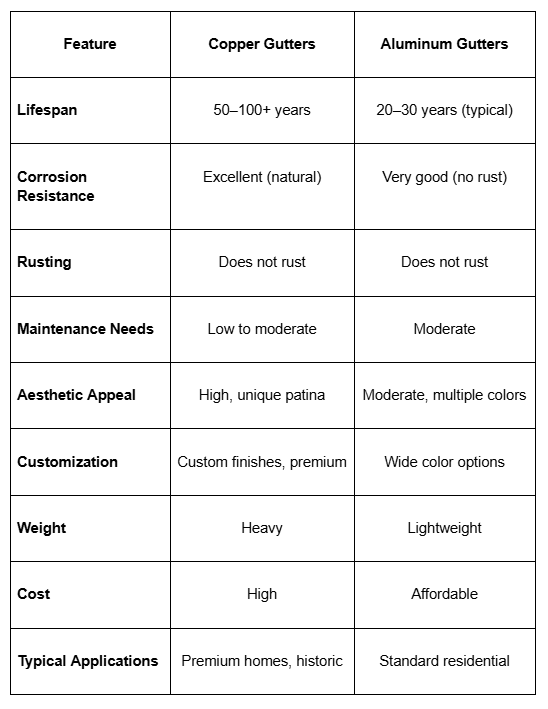
Side-by-Side Material Comparison
Cost Comparison: Upfront and Long-Term
Understanding cost isn’t just about the install price — it’s also about value over time.
Copper Gutters:
- Upfront cost: Significantly higher. (often 3–5x aluminum)
- Maintenance: Lower aesthetic maintenance but specialized repairs may cost more.
- Long-term value: Very high due to lifespan and minimal replacement needs.
Aluminum Gutters:
- Upfront cost: Affordable and predictable.
- Maintenance: Periodic cleaning and paint touch-ups may be needed.
- Long-term value: Excellent for most homeowners, though replacement may be necessary after 20–30 years.
For many homeowners, the long lifetime of copper can justify the upfront cost over decades — especially if you plan to stay in your home long-term or want a distinctive architectural look.
Real-World Durability: Weather, Rust & Corrosion
Both copper and aluminum handle moisture well, but their long-term performance differs.
Copper:
- Naturally corrosion-proof.
- Ideal for coastal or salt-air environments.
- Develops a patina that protects the surface.
- Can withstand decades of weather cycles.
Aluminum:
- Doesn’t rust but may oxidize.
- Good performance in humid and coastal climates.
- Lighter weight may be slightly more prone to denting.
If your home experiences heavy storms, salt air, or extreme weather cycles, copper holds a distinct advantage in durability.
How Aesthetic Value Influences Resale and Curb Appeal
One of copper’s biggest advantages isn’t structural — it’s visual.
Copper gutters develop a unique patina over time that enhances architectural character. For historic homes, custom builds, or luxury properties, copper can elevate overall curb appeal and may even improve resale value.
Aluminum, while available in many factory-applied colors, doesn’t develop this distinctive character over time. It performs well and looks clean, but lacks the differentiated appeal of copper.
If resale value and architectural luxury are priorities, copper offers a visible upgrade.
Maintenance: What Homeowners Should Know
Both copper and aluminum gutters require routine cleaning to prevent clogs and overflow. However, their maintenance profiles differ slightly:
Copper Maintenance:
- Does not require painting
- Occasional cleaning is needed (just like any gutter)
- Patina development is natural and often desired
Aluminum Maintenance:
- May require repainting over the years
- Cleaning is still essential
- Color can fade or chalk with prolonged sun exposure
Installing gutter guards can reduce cleaning frequency for either material.
Installation Considerations and Expertise
Copper gutters require skilled installation due to:
- Heavier weight per linear foot
- Custom fabrication needs
- Specialized soldering at joints
Aluminum gutters are lighter, easier to install, and widely available from many installers as seamless systems.
Because of the skill level required, copper installs can cost more in labor in addition to material.
Which One Is Right for Your Home?
Here’s a practical breakdown by homeowner scenario:
Choose Copper Gutters If:
- You have a premium or historic home.
- Architectural aesthetics are a priority.
- You plan to stay in your home long-term.
- You want a rust-proof system with long life.
- You like the look of natural patina over time.
Choose Aluminum Gutters If:
- You want a cost-effective, reliable system.
- You want multiple color options.
- You need an efficient gutter system installed quickly.
- You aren’t planning to stay in your home for decades.
- You want rust resistance without premium cost.
Real-World Cost Examples
Note: Exact pricing varies by region and installer, but typical ranges are:
Aluminum Gutters (installed):
• $8–$12 per linear foot. (average)
• More affordable upgrades. (snow guards, leaf guards)
Copper Gutters (installed):
• $25–$40+ per linear foot.
• Premium aesthetic and long lifespan.
Even though copper costs more upfront, you may never have to replace them — unlike aluminum, which may need replacement in 20–30 years.
Final Verdict: Is the Upgrade Worth It?
Yes — if:
- You want long-lasting performance with minimal replacement.
- You value architectural beauty and character.
- Your home’s design supports premium materials.
- You appreciate low corrosion, even in salty or humid areas.
- You plan to stay in your home long-term.
Not always — if:
- Budget is a primary concern.
- You want reliable performance without a premium price.
- You don’t need the upscale look of copper.
- You plan to sell your home within a decade or less.
Copper gutters provide exceptional value for homes that benefit from their longevity and aesthetic impact. Aluminum gutters, however, deliver excellent performance at a friendly price point and are the most practical choice for many homeowners.
Ready to Choose the Right Gutters for Your Home?
If you’re considering new gutters and want a professional evaluation, we can help you compare copper and aluminum options — including seamless installation, sizing recommendations, and pricing tailored to your home’s requirements.
Protect your home from water damage and boost its curb appeal with the right gutter system. Contact a trusted local installer today to get started!
Recent Posts